23 September 2026
Bottle Gift Bags Bulk: A Wholesale Sourcing Guide
Bulk bottle gift bags are chosen by format first. The bag material decides carrying strength, print method, and how the bag reads on a shelf. Paper, felt, canvas, leather, or Christmas styles each behave differently under load and under print. Get the format wrong and no amount of branding fixes it.
Pick the format before anything else
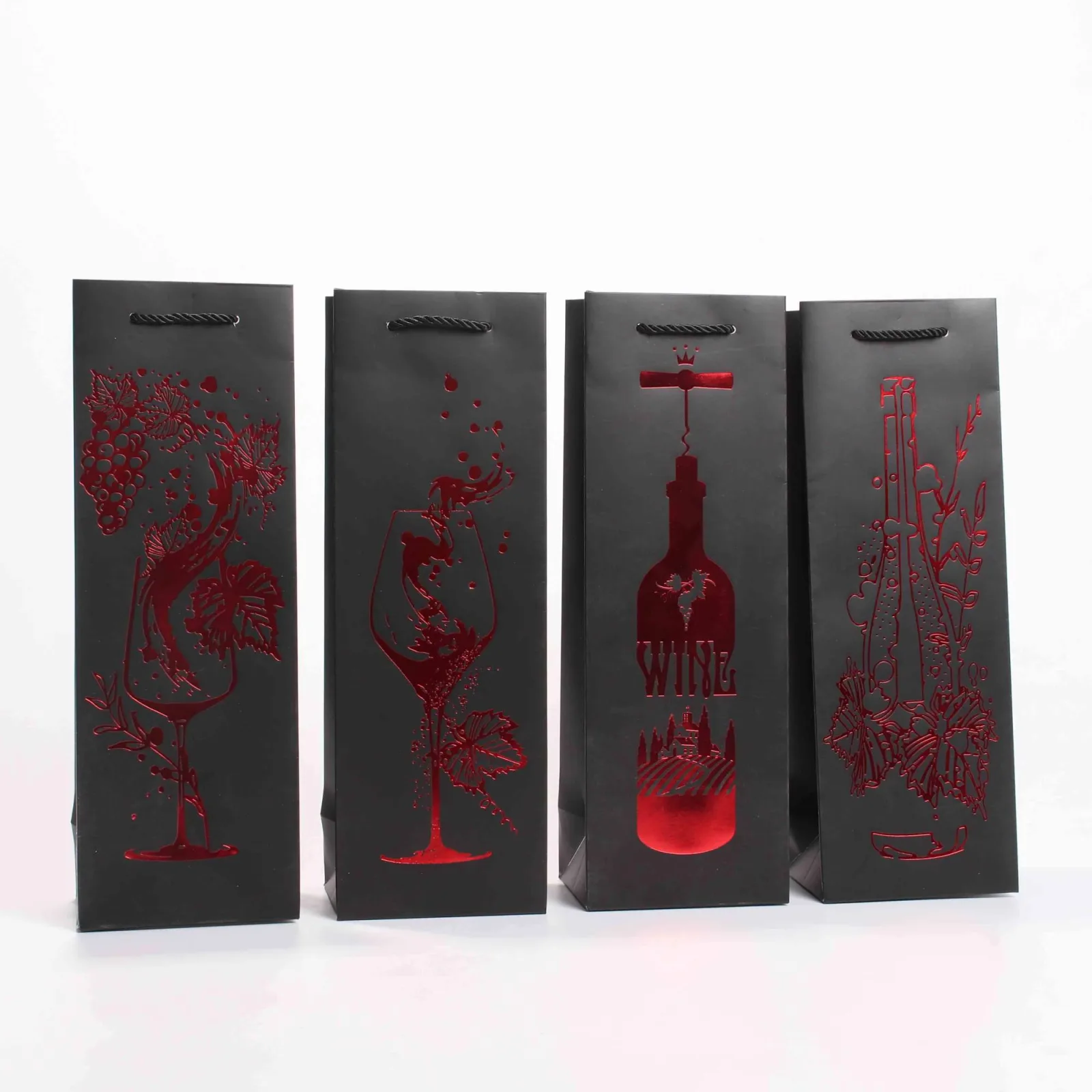
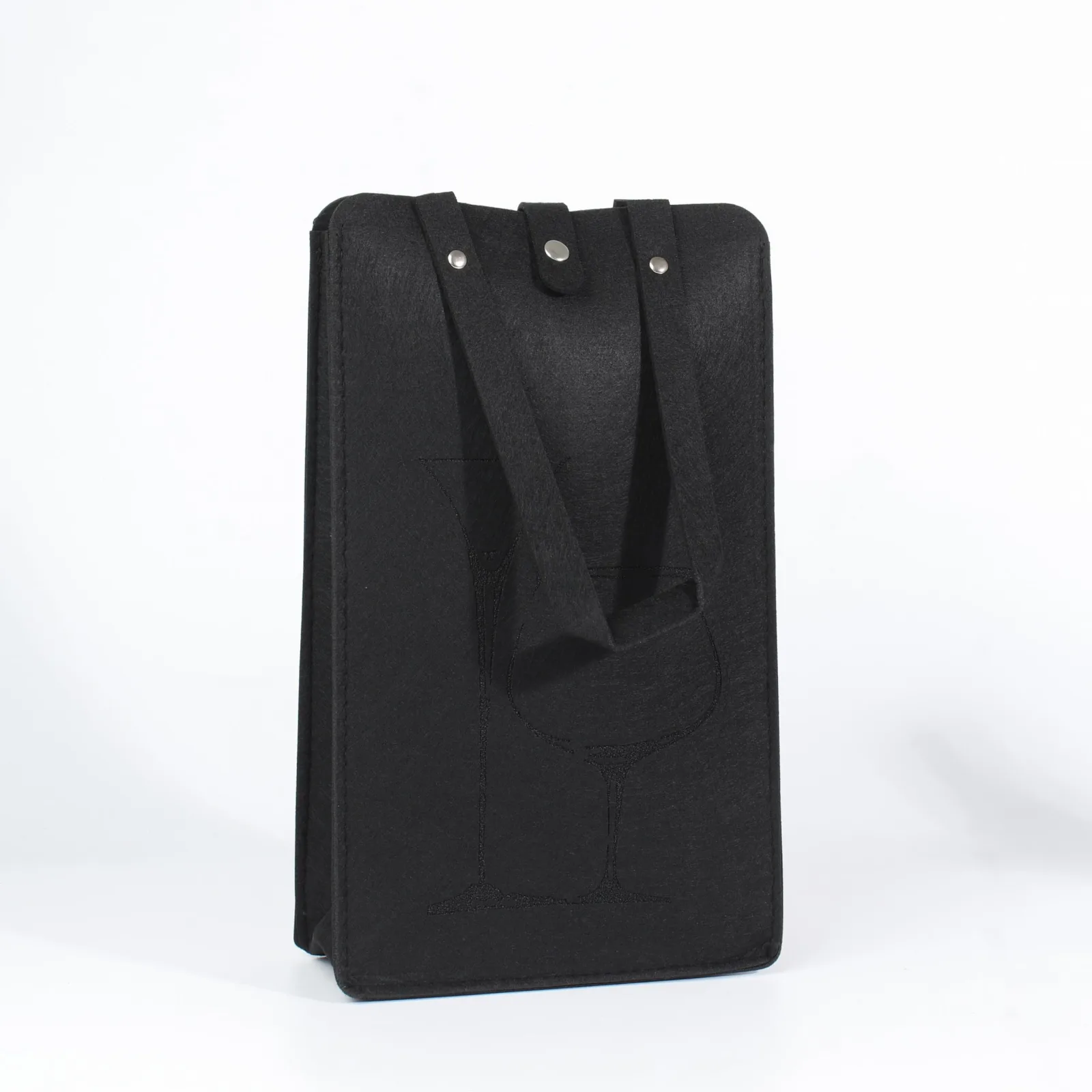
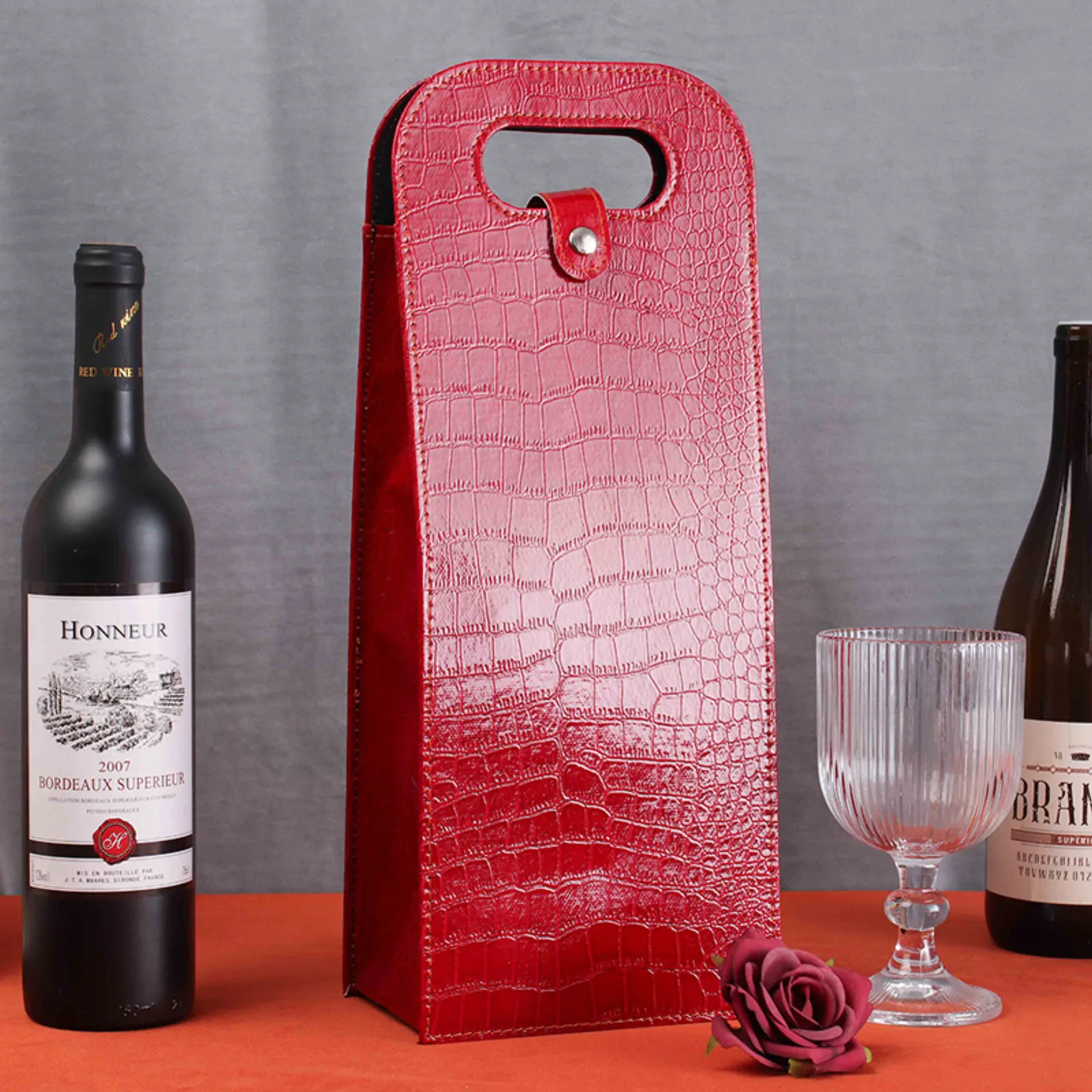
The format drives everything downstream. A paper wine bag prints beautifully and folds flat for storage, but it won't carry a heavy bottle as comfortably as felt or canvas. Felt and canvas wine bags take embroidery and applied finishes, and they hold their shape on a shelf. Leather and leather-look wine bags read as premium and last longer, but they cost more per unit and the print options are narrower. Christmas wine bags are seasonal, so you commit to a design and a quantity you can sell through in one window.
We also make box-and-bag sets. A rigid box carries the bottle, and a matching bag carries the set. If your buyer expects a presentation piece, that's the route. If they just want a bag, a bag is cheaper and lighter to ship. Decide which one your shelf needs before you look at materials.
Measure the real bottle, not the volume
A 750 ml bottle is not a dimension. Two bottles of the same volume can differ enough in width and height that one fits and the other doesn't. Measure the bottle you'll actually pack: width and depth across the body, and total height including the closure. Then size the gusset to the body, not to a nominal volume. A square or squat spirits bottle needs a wider gusset than a round one of the same height.
Weight matters too. A heavy bottle pulls harder on the handle and the base. That's where reinforcement patches and a stiff base board earn their place. If you skip them, the bag will tell you at the worst moment.
Materials and structures that carry the load
For paper bags, kraft paper, white card, and specialty or coated facing papers are the common choices. Facing paper runs from 157 g upward. For felt and canvas, the fabric weight and the handle attachment decide how the bag ages. Leather-textured paper gives you the look of leather without the cost, and it takes foil stamping well.
Handles are the weak point. A flat paper handle glued to the top edge will pull out before the bag itself fails. A reinforced patch or a stitched handle spreads the load. Base boards keep the bottom flat, especially for heavier bottles. If you're comparing structures side by side, our materials and structures page lays out what we stock.
Branding: what each material will and won't do
On paper, foil stamping, UV printing, and four-colour print are the usual routes. Foil gives you a metallic hit, UV gives you a raised gloss, four-colour gives you full artwork. On felt and canvas, embroidery and applied finishes are the honest options; print on felt tends to sink into the fibres and lose detail.
Colour control is where buyers get surprised. Black, deep blue, and burgundy are the hardest to hold. They drift between runs and between materials. We use Pantone matching, first-article approval, and mid-run sampling to keep them in line. That's not a guarantee, it's a control. If you need the bag and the box to match exactly, plan for a slightly wider tolerance on the darker shades.
- Foil stamping works on paper and leather-textured paper; it can look patchy on felt.
- UV printing gives a raised gloss on coated paper but not on canvas.
- Embroidery is the most durable branding on felt and canvas.
- Pantone matching plus first-article approval plus mid-run sampling is the standard control set.
Failure modes a factory engineer checks
Handle pull-out is the first one. The handle tears away from the bag body when the glue line or the patch is too small for the load. Gusset bulge is the second: the bag widens at the bottom and the bottle leans. A sagging base is the third: the bottom board is too thin or the bag is overloaded. Colour drift between the bag and the box in a set is the fourth, and it's the one buyers notice on the shelf.
We check for these before shipment. Our in-house checks include a 1.2 m six-face drop test with the bottle loaded, a stacking top load of 40 kg or more for 24 hours, and truck and sea vibration simulation. If the bottle moves inside the bag after that, the insert or the gusset is wrong. Our quality control page explains how we run those checks.
When a bag is the wrong answer
If your buyer needs a rigid presentation piece, a bag won't do it. A box-and-bag set is the better route. The rigid box holds the bottle at four points, with no unsupported neck or shoulder, and the bag carries the set. That's a different cost and a different shelf presence.
We make both, so we'll tell you when the bag is the wrong call. If you're unsure, look at the full range on our wine bags and boxes page. It shows the formats side by side.
What to send us for a quote
Send bottle dimensions or a bottle sample. Add a reference design, the quantity you're considering, and any special requirements. If you have a retail or gifting deadline, say so, but we don't quote lead times here. Two sample types are available: a blank sample for structure and a printed sample for visual. Payment is by T/T or PayPal. Shipping is by air, sea, or express.
If you want to see how the OEM/ODM process runs, our custom wine bag manufacturing page walks through it. And if you're comparing totes and bags, this buyer's guide to wine tote bags covers the overlap.
Key points
- Format first: paper, felt, canvas, leather, or Christmas, then size to the real bottle.
- Reinforce handles and base for heavy bottles; a flat glued handle will pull out.
- Black, deep blue, and burgundy are the hardest colours to hold across a run.
- If the buyer wants rigid presentation, a box-and-bag set beats a bag.
- Send bottle dimensions or a sample, reference design, quantity, and special requirements.
Questions buyers ask
What's the difference between a bottle gift bag and a wine tote bag?
A bottle gift bag is usually a single-bottle carrier with a handle, often paper, felt, or leather. A wine tote bag may hold one or more bottles and is built for repeated use. The overlap is real, but the retail intent differs: gift bags are often disposable, totes are kept.
Can I mix bag materials in one order?
Yes, but each material has its own print method and colour behaviour. Mixing paper and felt in one order means two sets of samples and two colour targets. It's doable, but plan for the extra step.
How do I make sure the bag and box match in a set?
Approve a first article for both, then sample mid-run. Dark shades like black, deep blue, and burgundy drift the most, so expect a slightly wider tolerance on those. If exact match is critical, choose a lighter shade.
Send your bottle dimensions or a sample, reference design, quantity, and special requirements to [email protected] or use the quote form. Get a Quote
Put this on your bottle
Send the bottle sample or dimensions, quantity and a reference design. We reply with structure options and pricing.
- Email[email protected]