27 September 2026
Custom Printed Paper Wine Bags: A Buyer's Spec Guide
Custom printed paper wine bags come down to four decisions: the stock, the handle, the print method and the artwork setup. Get those right and the bag carries a 750 ml bottle without sagging, reads clean on shelf, and survives the trip home. Get one wrong and you'll see it at the point of sale.
Stock: kraft paper versus white card
Kraft paper has a natural brown tone and takes ink in a slightly muted way, which suits earthy or craft positioning. White card gives you a cleaner base for bright brand colours and fine detail. Both work for a bottle, but the sheet has to be stiff enough to hold shape once a full bottle is inside. We work to a facing paper rule of 157 g minimum specialty or coated paper. No high-moisture paper, because a soft or damp sheet cockles under heavy ink coverage and sags at the base once the bottle is loaded.
The failure mode here is a bag that looks fine flat and collapses at the bottom fold when it's picked up. That's almost always a paper stiffness problem, not a handle problem. If you're unsure which stock suits your artwork, look at our materials and structures page for the paper families we stock. For heavier or square spirits bottles, paper alone may not be the right answer, and we'll say so.
Handles: die-cut, ribbon, rope, patch-reinforced
Handle style changes how the bag feels in the hand and how it fails. Die-cut handles are cut from the bag itself, so there's no added material, but the top edge can tear if the board is light. Ribbon and rope handles look dressier and are common on gift runs. Patch-reinforced handles add a paper patch inside the top edge where the handle attaches, which spreads the load.
The failure mode a factory engineer names first is the handle pulling out of the top edge when a full bottle is lifted. That's why the top turn-over and reinforcement matter more than the handle style itself. If your bag is going to be lifted repeatedly, a patch-reinforced handle on a stiffer stock will outlast a pretty ribbon on a thin sheet. We check this with a shake test: bottle loaded, shake for 10 seconds, no movement.
Print method: four-colour, foil, UV
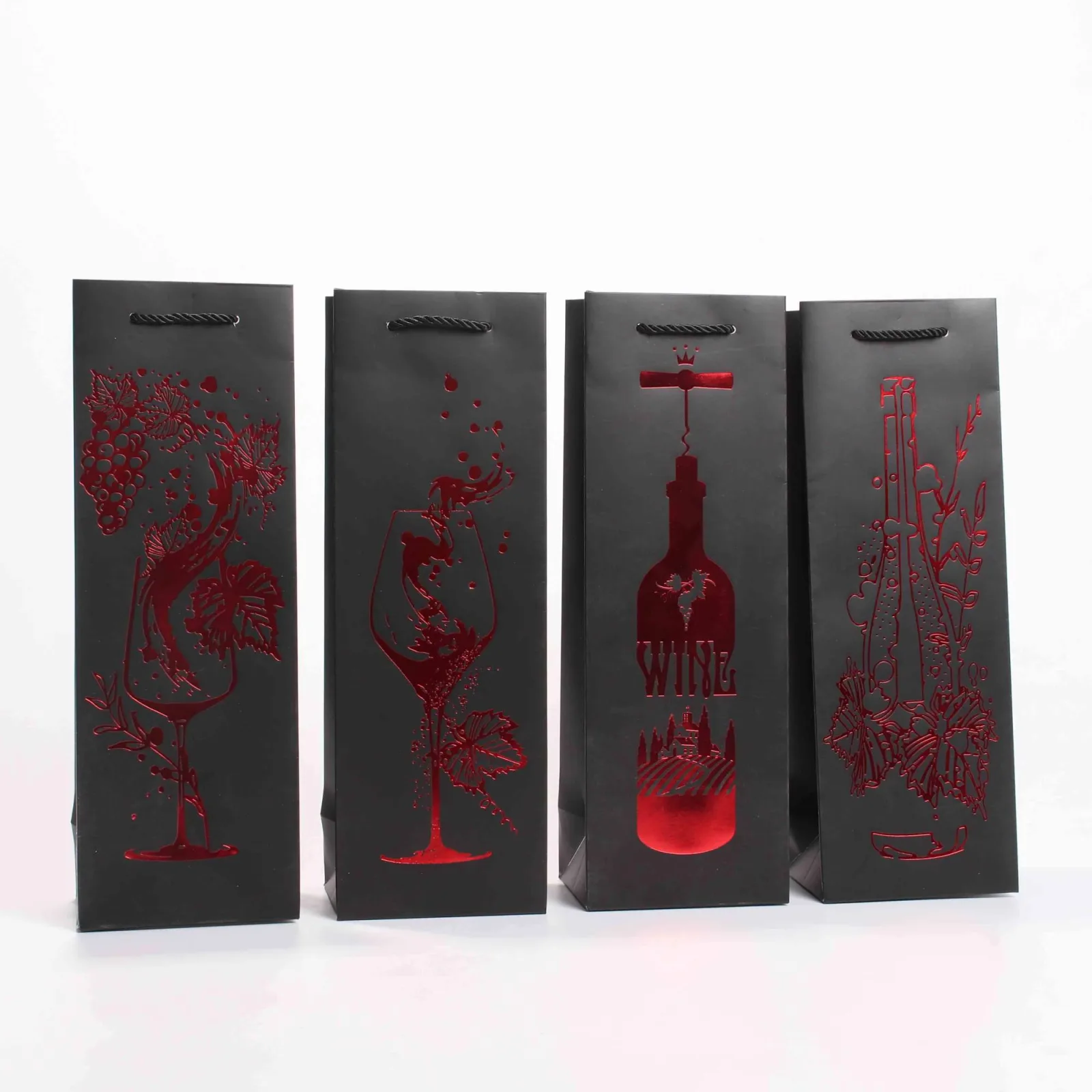
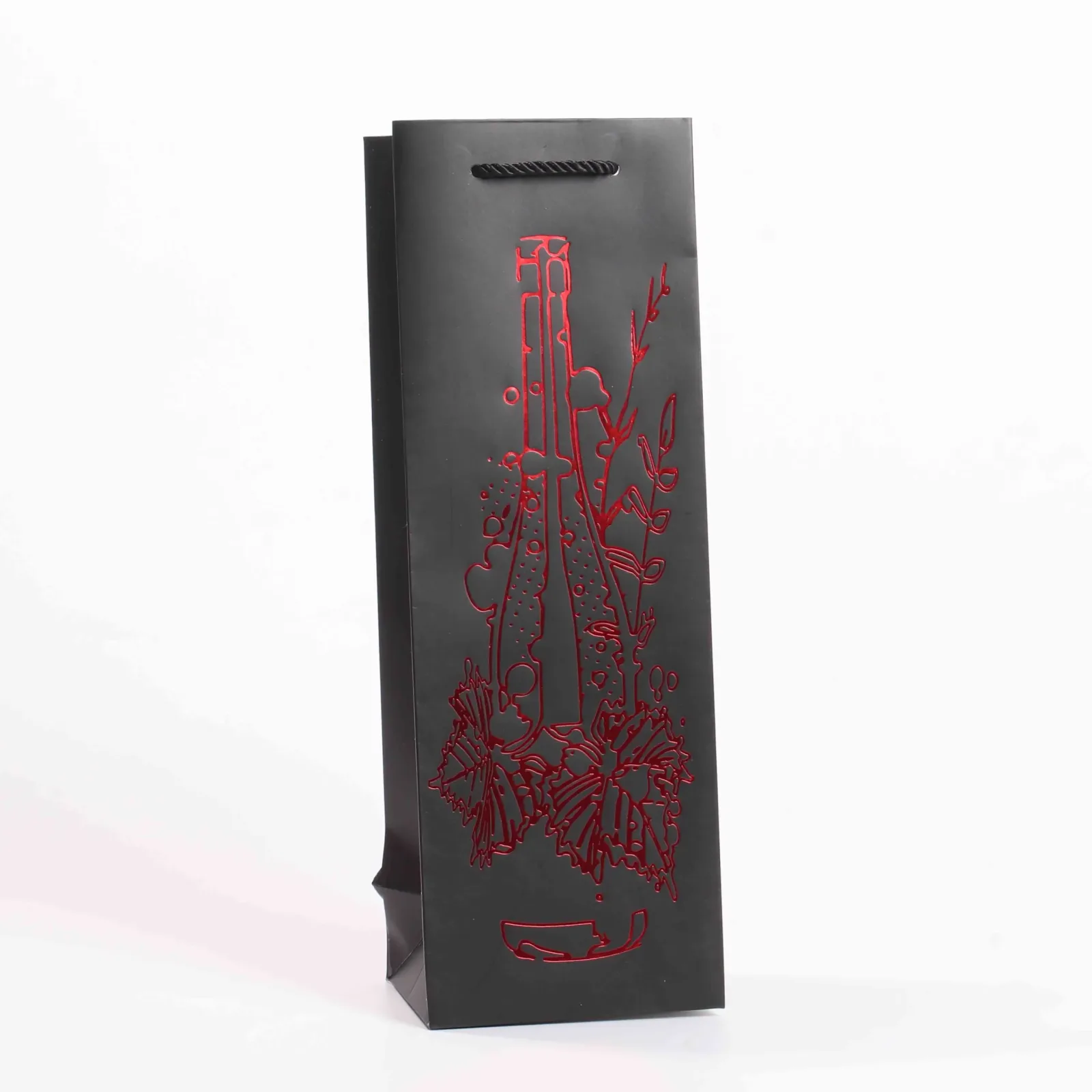
Four-colour process is for photographic artwork, gradients and complex images. Foil stamping gives a metallic brand mark, often in gold or silver, and it reads as a premium detail. UV printing lays a raised gloss spot on top of the print, which catches light and adds texture. Each method has a trade-off. Foil doesn't hold fine reversed type well, so keep small text out of it. UV spots can look uneven on textured kraft. And black, deep blue and burgundy are the hardest colours to hold across a run.
We control colour with Pantone matching, first-article approval and mid-run sampling. That's the honest sequence. If you need a specific brand colour, send a Pantone reference. If you need photographic reproduction, four-colour is usually the better route. For a deeper look at how these methods behave on paper, see our printing guide.
Artwork setup: what to send
Start with dimensions. Either give us the bag size you want or send a bottle sample and we'll work from that. A reference design helps us understand the look you're after. Keep fine reversed type out of foil, because thin lines can fill in. Allow bleed and a safe margin so trimming doesn't clip your logo or text. If you're supplying your own artwork, set it up with the safe area marked.
The artwork stage is also where we catch problems early. A logo that's too close to the top edge can interfere with the handle reinforcement. A dark background behind a foil stamp can make the foil look muddy. We'll flag those before we make plates. Our custom bag process covers the steps from consultation to packing.
When paper is the wrong answer
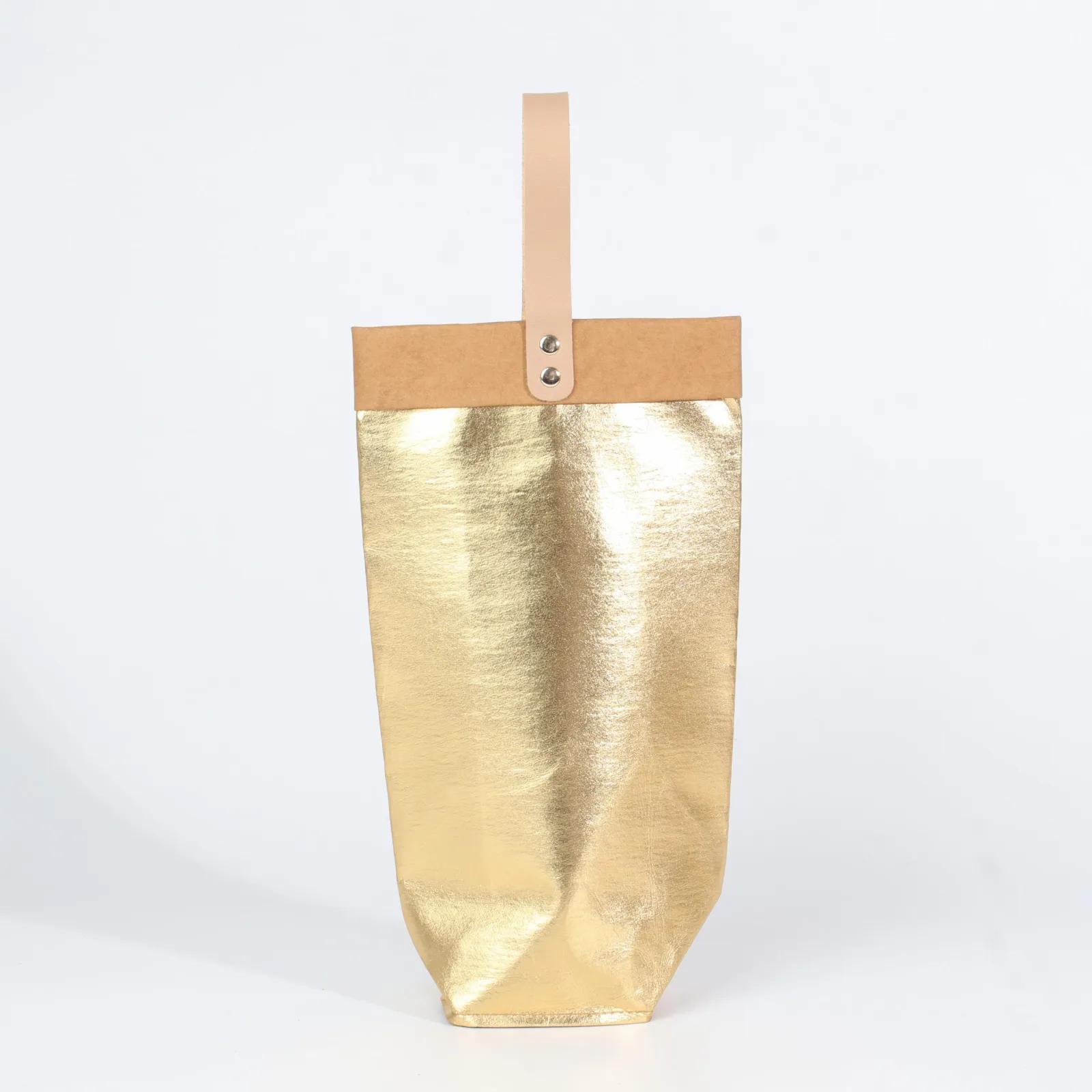
A very heavy or square spirits bottle, or a bag that has to survive repeated reuse, points to felt, canvas or leather instead. Paper is great for retail and gifting where the bag is used once or twice. It's not a tote. If your buyer expects to carry the bag for years, a felt or canvas bag will hold up better.
We make those too. But we'll tell you when paper isn't the right call. That's part of the consultation. If you're not sure, send us the bottle and we'll advise.
What to send for a quote
Send bag dimensions or a bottle sample, a reference design, quantity and any special requirements. That's enough for us to quote from the online consultation step. We'll also tell you if we think a different stock or handle would serve you better. If you want to see the full range of paper bags we make, start with our paper wine bags page. Our quality checks page explains the in-house tests we run before shipment.
Key points
- Facing paper 157 g minimum, no high-moisture paper, or the bag sags at the base.
- Handle pulling out is the top failure mode; top turn-over and reinforcement matter more than handle style.
- Black, deep blue and burgundy are the hardest colours to hold; Pantone and first-article approval help.
- Keep fine reversed type out of foil; allow bleed and a safe margin.
- If the bag must survive repeated reuse, felt, canvas or leather is the better answer.
Questions buyers ask
What paper weight should I use for a custom printed paper wine bag?
We work to a facing paper rule of 157 g minimum specialty or coated paper. No high-moisture paper, because a soft or damp sheet cockles under heavy ink and sags at the base once a bottle is loaded. For heavier bottles, a stiffer stock helps, but the exact weight depends on the bottle and the handle.
Can you print my logo in gold foil on a paper wine bag?
Yes, foil stamping is a common way to add a metallic brand mark. Keep fine reversed type out of foil, because thin lines can fill in. We'll check your artwork and flag any issues before making plates. Foil works best on a smooth, coated stock rather than a rough kraft.
What do I need to send to get a quote for custom printed paper wine bags?
Send bag dimensions or a bottle sample, a reference design, quantity and any special requirements. That's enough for us to quote from the online consultation step. If you have a Pantone colour, include it. We'll come back with a recommendation on stock, handle and print method.
Send your bag dimensions or a bottle sample, reference design, quantity and special requirements, and we'll quote from the online consultation step. Get a Quote
Put this on your bottle
Send the bottle sample or dimensions, quantity and a reference design. We reply with structure options and pricing.
- Email[email protected]