14 August 2026
Reusable Wine Bag: Kraft, Felt and Canvas Compared
A reusable wine bag has to survive more than one trip. The material decides how many trips, how it handles a damp bottle, and how your print looks after six months. Kraft is cheapest. Felt and canvas last longest. Washable kraft sits between. Here's the honest comparison, failure modes included.
What Makes a Bag Reusable, Not Just Recyclable
Reusability is structural before it's material. A paper bag that tears at the handle after two trips isn't reusable no matter what you call it. So check the handle attachment first. On kraft bags, a folded and glued top edge works for one trip. It fails when the glue dries or the paper flexes. Sewn handles on felt and canvas hold for years. Rivets help, but they cost more and catch on clothing. Ask your supplier how the handle is fixed, not just what it's made from.
Base construction is the second failure point. A flat-bottom bag with a separate glued base card splits if the bottle rests on the seam. Look for a folded base with a reinforced insert. Or for felt and canvas, a double-stitched bottom panel. The bag should stand on its own when empty. If it flops, the material is too light. A reusable bag also needs to recover its shape after being crushed in a car trunk. Kraft paper doesn't. Washable kraft partly does. Felt and canvas do it naturally.
- Handle attachment: sewn beats glued for anything over a few trips.
- The base must be reinforced, not just a folded seam that splits under a 750 ml bottle.
- A reusable bag should stand empty and recover its shape after being crushed.
The Wet Bottle Problem: Where Kraft Fails
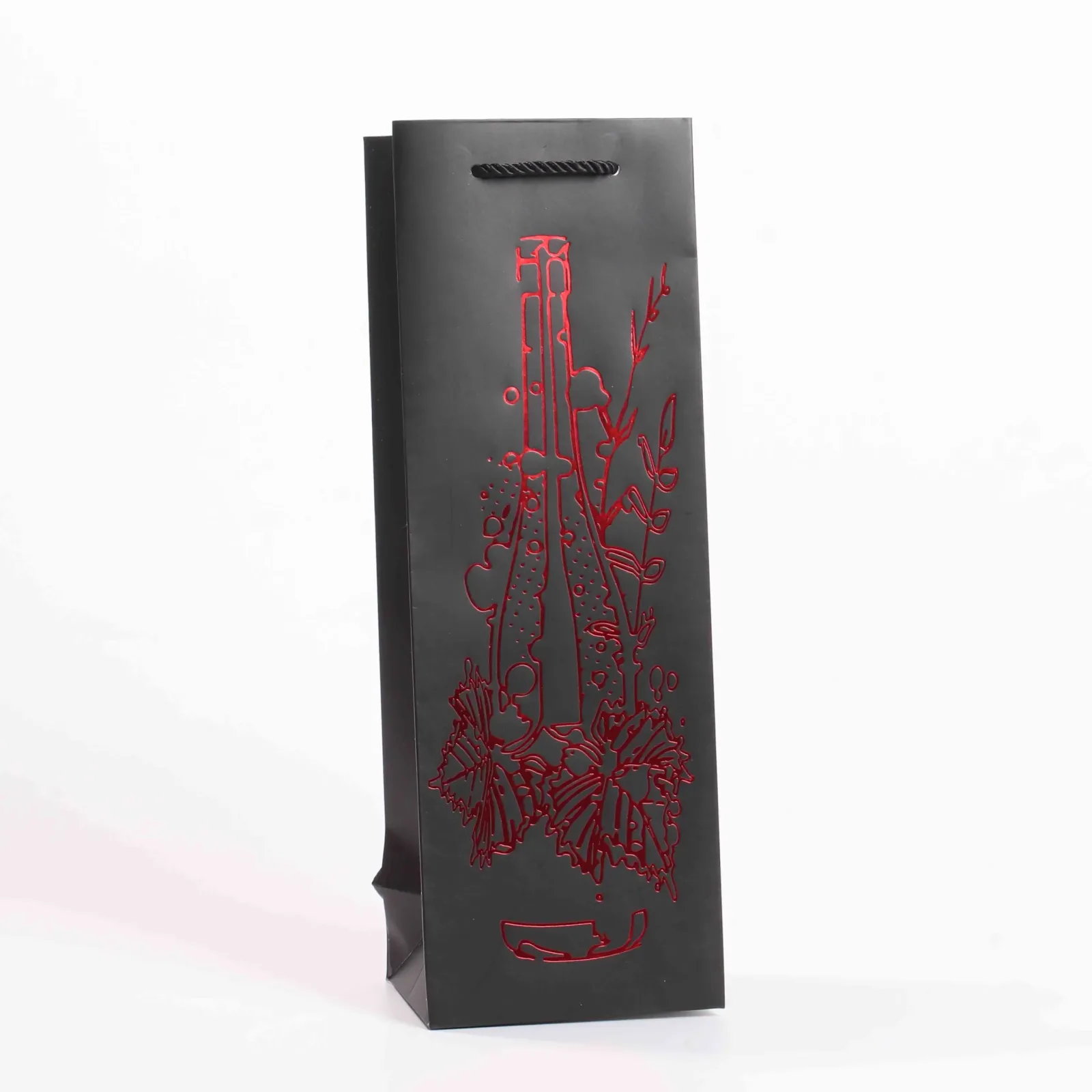
Bottles come out of a fridge or an ice bucket wet. Condensation soaks into paper. Standard kraft wine bags lose strength when damp. The bottom can drop out on the walk from the car to the door. I've seen it happen with a 750 ml bottle. If your customer buys a bag for chilled wine, kraft is the wrong answer unless the bottle is wrapped first. Our Paper Wine Bags are fine for room-temperature bottles. But I wouldn't promise them for a fridge-cold bottle carried more than a few meters.
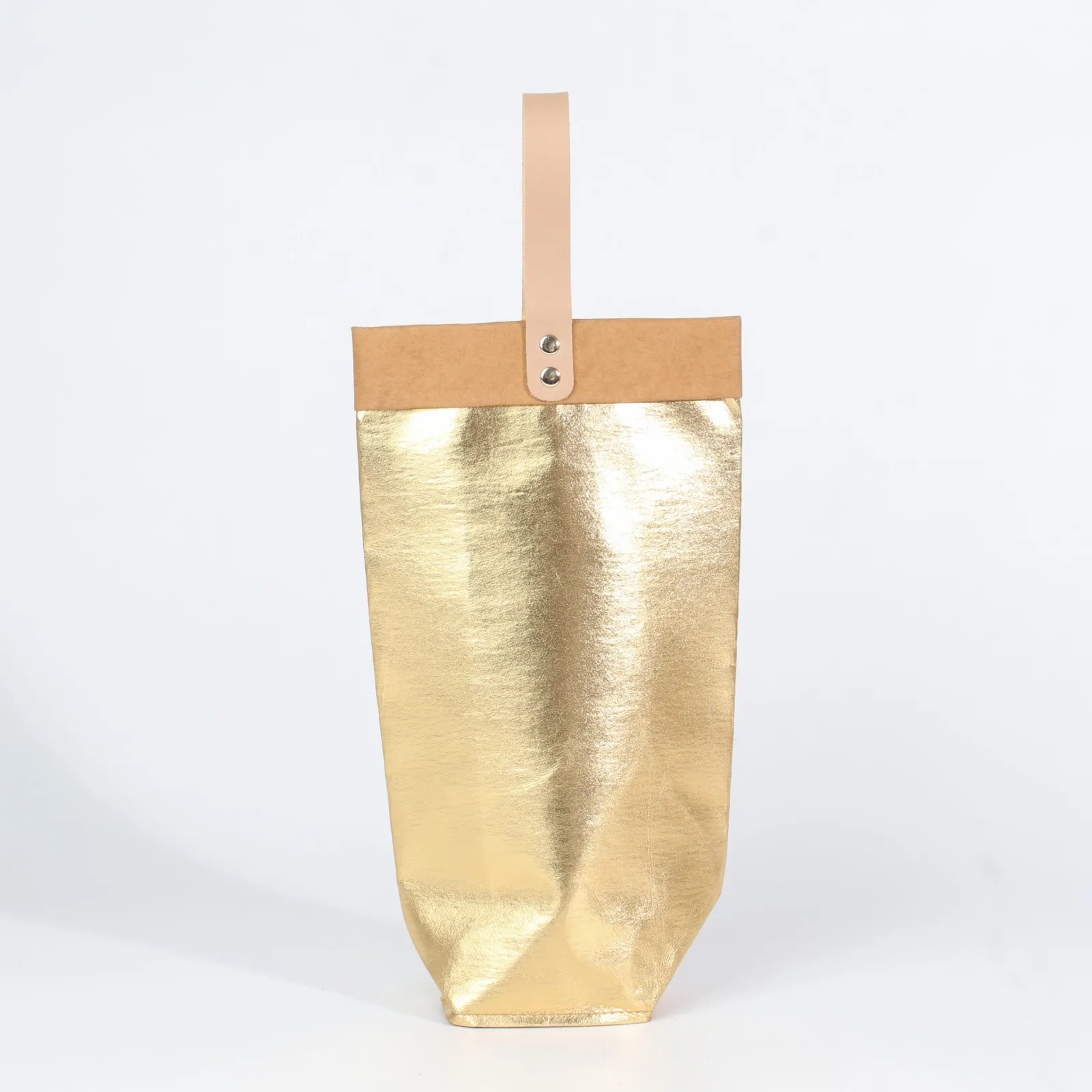
Washable kraft handles moisture better. It's treated to resist water, but it's still paper. Edges get soft over time. Felt is the best choice for a wet bottle. It absorbs condensation and dries without losing shape. Canvas is nearly as good. Waxed canvas repels water; plain canvas wicks it. If you sell chilled wine, think about a felt bag. It's the material that doesn't punish you for a little condensation.
- Standard kraft loses strength when damp; the base can fail under a cold bottle.
- Washable kraft resists water but still softens at the edges over many uses.
- Felt absorbs condensation and dries without losing shape; canvas is a close second.
Felt and Canvas: The Long-Life Pair
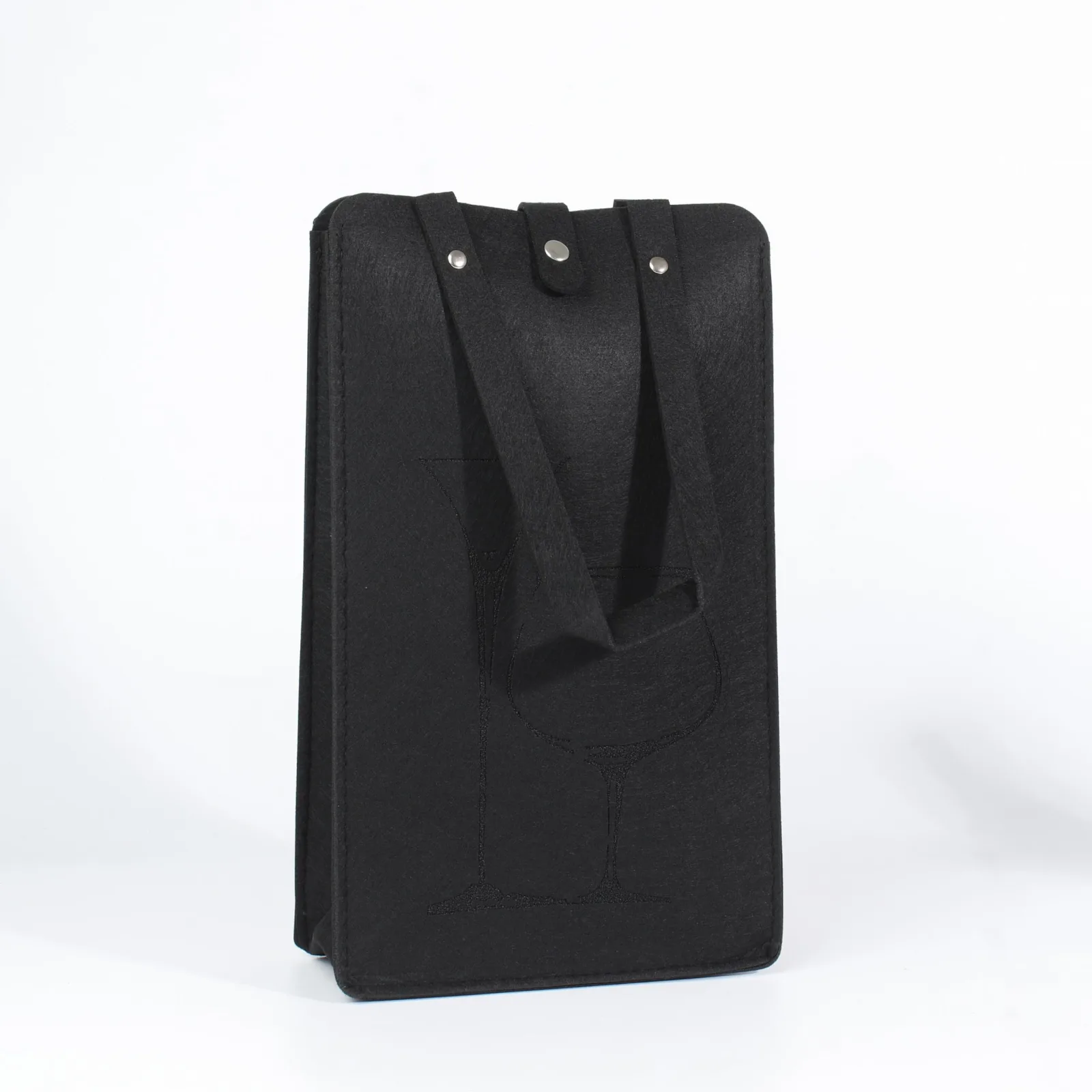
Felt and canvas behave alike, so I'll cover them together. Both survive dozens of trips. A well-made felt wine bag lasts for years as a gift bag, a tote, or a storage sleeve. Canvas is tougher and holds a printed logo longer because the surface is smoother. Felt is softer and feels more premium in the hand. But it pills with heavy abrasion. Neither material needs a separate insert to protect the bottle. The fabric itself cushions. That's a real cost saving compared to a rigid box.
The trade-off is print. Screen printing on felt works, but fine lines blur because the surface is fibrous. Heat transfer gives a crisper edge on canvas. On felt, it can feel like a plastic patch. If your design is a simple logo or a one-color graphic, both materials print well. If you need a photograph or a fine gradient, felt is the wrong answer. Canvas can handle more detail, but still not what a coated paper stock can do. See our Felt and Canvas Wine Bags for what works in practice.
Cost is another shared trait. Felt and canvas bags cost more per unit than paper. Sometimes several times more. But the reuse rate justifies it for retail or corporate gifting where the bag is part of the product. A paper bag gets thrown away. A felt bag gets kept. That's the whole point. If your buyer wants a bag that becomes a shopping tote, canvas is the choice. If they want a soft, premium feel for a gift, felt wins.
- Felt and canvas both survive dozens of trips and cushion the bottle without an insert.
- Screen printing blurs on felt; heat transfer is crisper on canvas but can feel plastic.
- Felt feels more premium, canvas holds a logo longer and handles more print detail.
Where Kraft Still Wins
Kraft paper isn't a bad material. It's the wrong material for a long-life reusable bag. But it's right for a low-cost, high-volume promotional bag that gets used a few times. It prints beautifully with offset or UV. Fine type, gradients, full-color photos: all look better on kraft than on felt or canvas. And it folds flat for shipping, which cuts freight cost. A felt bag ships as a cube. A kraft bag ships as a sheet. That matters when you're ordering ten thousand pieces.
Washable kraft is the compromise. It looks like kraft but behaves more like fabric. You can crumple it, wash it, and it comes back. It doesn't tear as easily as standard kraft. Print quality is almost as good. The cost is higher than standard kraft but lower than felt or canvas. Think of it as a reusable paper bag for a customer who wants the paper look without the paper failure. Our Custom Wine Bag Manufacturing page explains the options.
- Kraft is the cheapest and prints the best; it's fine for a few uses.
- Kraft bags fold flat for shipping; felt and canvas ship as thicker packages.
- Washable kraft gives the paper look with better tear resistance and a mid-range price.
Print Trade-offs on Each Material
Printing on a reusable wine bag isn't the same as printing on a box. Paper stocks take offset and UV well. You get fine detail and smooth gradients. Felt and canvas are textile surfaces. Screen printing lays down a thick ink layer that sits on top of the fibers. It's durable but coarse. Heat transfer gives a sharper edge but adds a layer that can crack or peel after many washes. For a one-color logo, screen print on felt works. For a detailed label reproduction, use paper or a rigid box with a paper wrap.
The color issue is real. Black, deep blue and burgundy are hardest to hold on any material. Especially on felt, where the ink soaks in unevenly. Our color control process includes Pantone matching and first-article approval. But a fibrous surface will always show more variation than a coated paper. If your brand color is a dark, saturated tone, test a printed sample before you commit. That's what the sample step is for. See Materials and structures for the full range.
- Paper stocks handle fine detail and gradients; felt and canvas are better for simple, bold graphics.
- Screen printing is durable but coarse; heat transfer is crisper but can crack over time.
- Dark colors like black and burgundy are hardest to hold on fibrous materials; always test a sample.
Sizing a Reusable Bag So the Bottle Doesn't Rattle
A reusable bag that's too big lets the bottle slide and bang against the sides. Too small, and the neck pokes out or the base tears. The rule we use for inserts applies here too: the bottle should be held at four points, with no unsupported neck or shoulder. For a bag, that means the width should be close to the bottle diameter. Height should allow about two fingers of headroom above the cork. A standard 750 ml bottle is roughly 30 cm tall. But always measure your actual bottle.
Check the fit with a full bottle. Shake the bag for ten seconds; the bottle should not move. Tilt it to 45 degrees; it should not slide. Turn it upside down over a soft surface; the bottle should not fall out. These are the same checks we run in-house, and they work for any bag. If the bag fails, it's too big or the base is too soft. A reusable bag that lets the bottle rattle will damage the label and feel cheap. Get the size right.
- The bag should be a little wider than the bottle and allow two fingers of headroom.
- Test with a full bottle: shake for 10 seconds, tilt to 45 degrees, invert; no movement allowed.
- A bag that lets the bottle rattle will damage the label and feel cheap.
Key points
- Felt and canvas are the true reusable materials; kraft is for a few trips.
- Wet bottles destroy standard kraft; choose felt for chilled wine.
- Paper prints better than felt or canvas; test dark colors on any fibrous surface.
- Size the bag tight to the bottle and check with shake, tilt and invert tests.
- Washable kraft is the middle ground: paper look, better tear resistance.
Questions buyers ask
What is the most durable reusable wine bag material?
Felt and canvas are the most durable. A well-made felt bag lasts for years and cushions the bottle without an insert. Canvas is tougher and holds print longer, while felt feels more premium. Both survive dozens of trips, unlike standard kraft paper which fails after a few uses, especially with damp bottles.
Can you print a full-color photo on a felt wine bag?
Not well. Felt is a fibrous surface, so fine lines and gradients blur. Screen printing works for simple one-color logos, and heat transfer gives a crisper edge but can feel like a plastic patch. For detailed photo reproduction, use a paper bag or a rigid box with a paper wrap instead.
What size should a reusable wine bag be for a 750 ml bottle?
A standard 750 ml bottle is about 30 cm tall. Your bag should be a little wider than the bottle and tall enough for two fingers of headroom above the cork. The fit should be snug: shake for ten seconds, tilt to 45 degrees, and invert. No movement means the bottle is held safely.
Send your bottle dimensions or a sample, and we'll recommend the right reusable bag material for your order. Get a Quote
Put this on your bottle
Send the bottle sample or dimensions, quantity and a reference design. We reply with structure options and pricing.
- Email[email protected]