12 September 2026
Liquor Gift Bags: Specifying Bags for Heavier Spirits Bottles
Liquor gift bags fail for a reason any packaging buyer learns fast: the spirits bottle itself is heavier, usually square or squat, and crowned with a tall stopper. A bag that works fine for wine? It rips right at the handle. It bulges along the gusset, or the bottle tips. So here's how you spec something that actually takes the load.
Start with the Real Bottle
Measure the bottle, never the label. Width and depth come from the widest part of the body, and total height has to run up past the stopper. Same height, square bottle, you'll need a wider gusset than a round one gets, because those corners push outward. Size against a nominal figure like 750 ml and you've got a bag that fits one shape, then lets the next one down. Corner pressure is what nobody accounts for.
Most failures begin at the gusset (it's the usual suspect). A gusset built to the body rather than the neck stops the whole thing from ballooning out. Put a stiff base board under a heavy bottle so the bag won't sag and tip it. Nothing there, and the bottle leans, the handle yanks, the bag looks worn out long before it hits the shelf.
We control the insert to plus or minus 1 mm and the box body to plus or minus 2 mm. Bags are no different. Too tight and your bottle won't drop in; too loose and it wanders. Ten seconds of shake with no movement, a 45 degree tilt with no slide, then invert with no release. Box inserts taught us those checks, and the same idea holds for any bag carrying a heavy bottle.
Materials That Carry the Weight
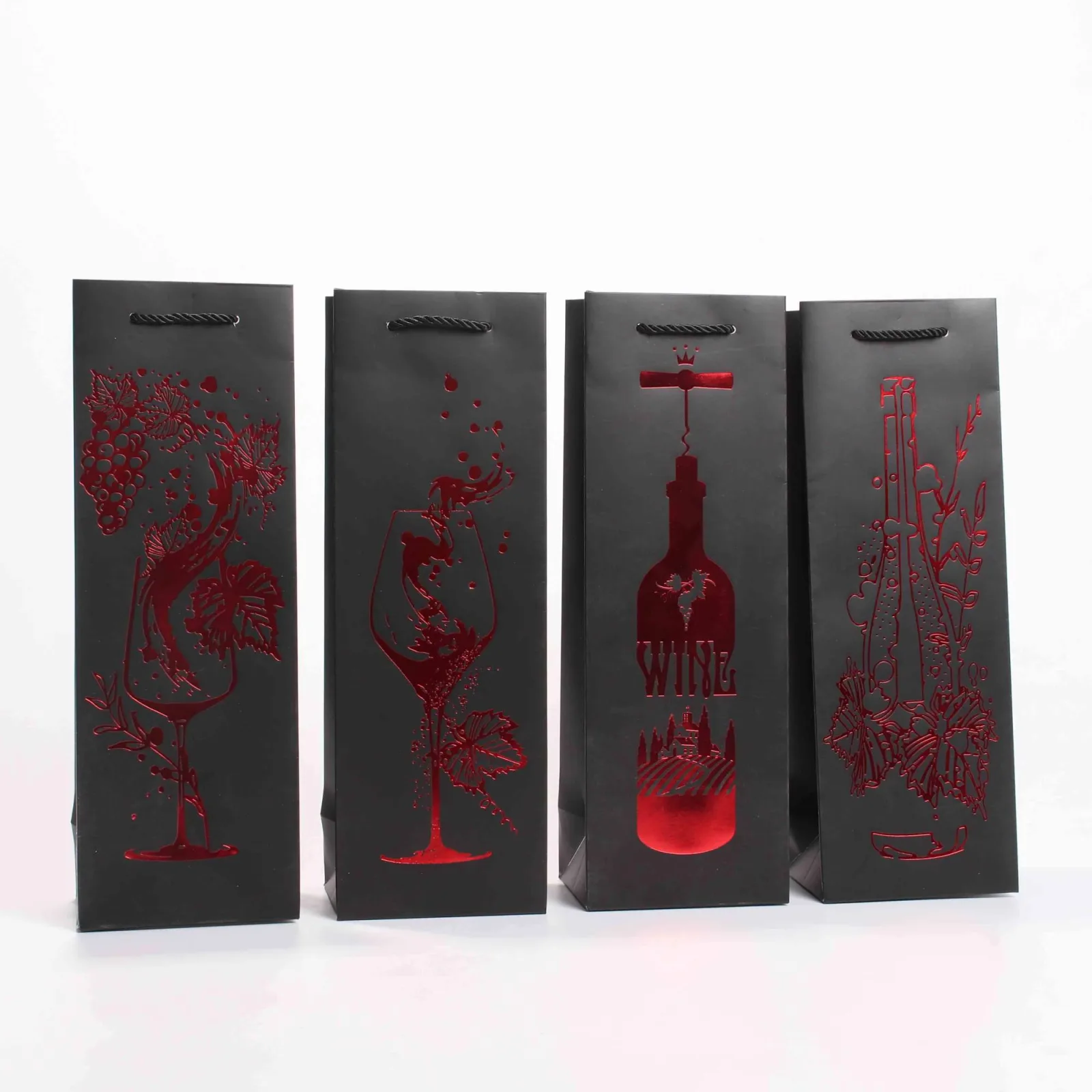
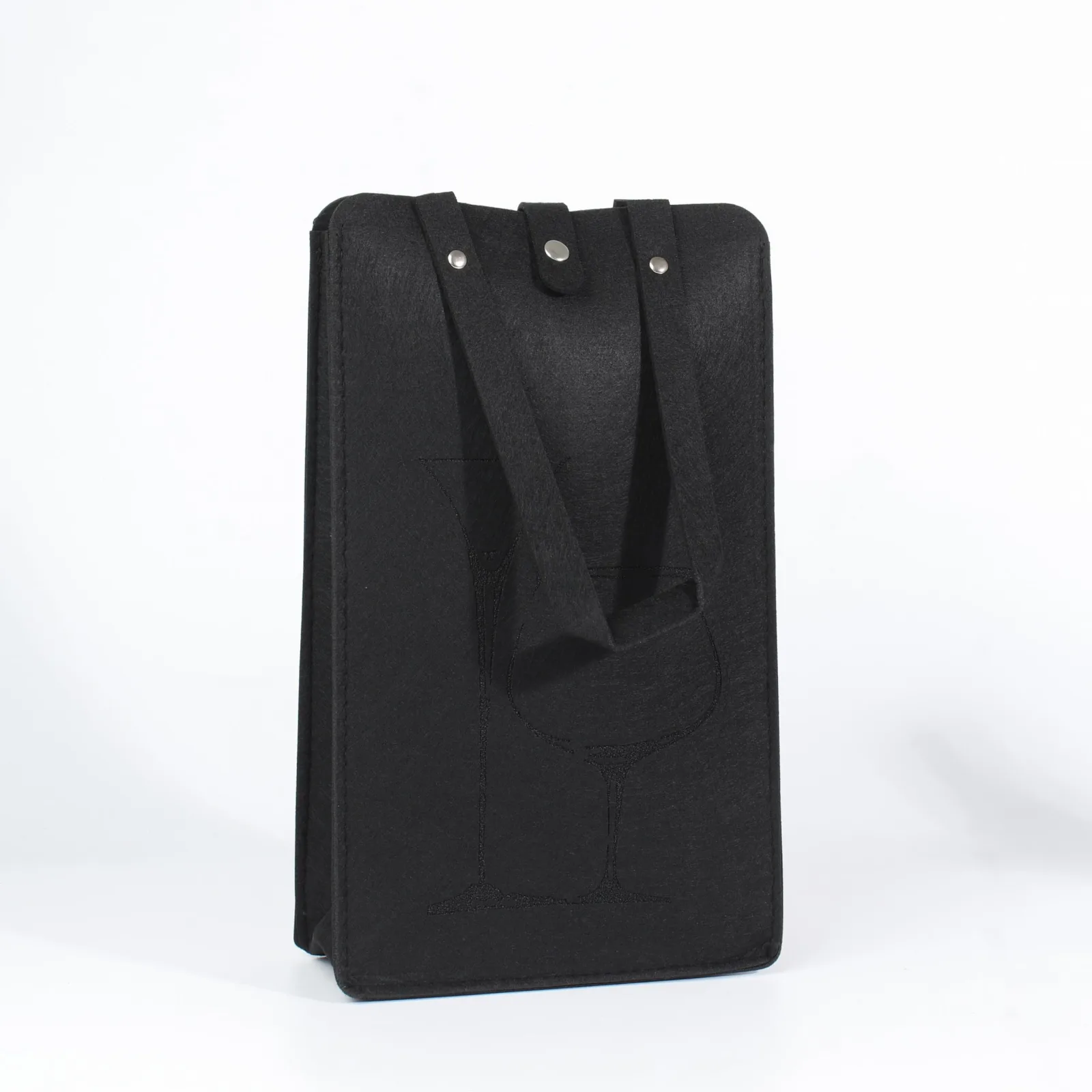
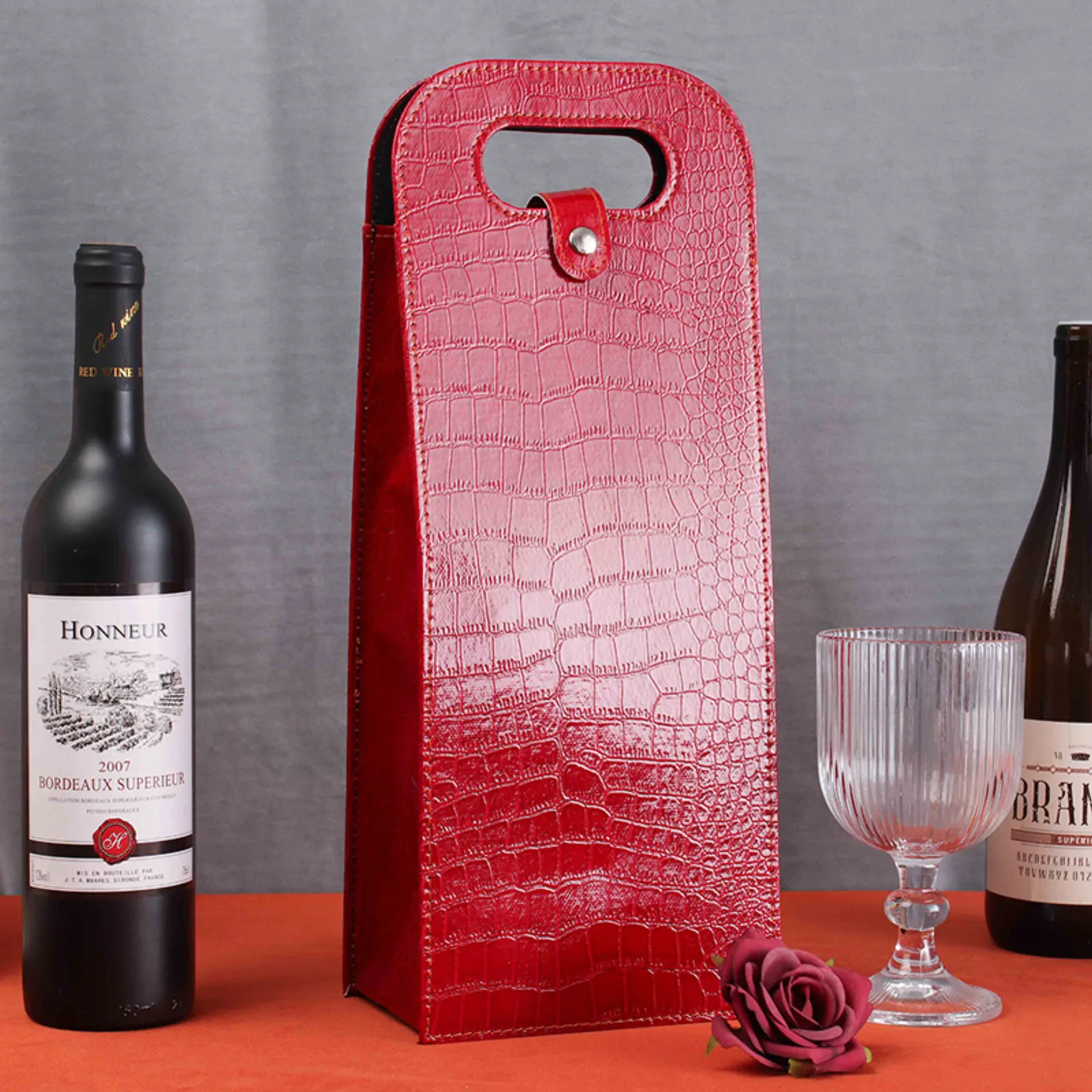
Three materials do most of the work for spirits packaging. First, cardstock paper, which is the lightest and easiest to print, though it carries the least weight. Then felt: heavier, more forgiving. It soaks up shock, and the hand feel has real substance. Faux leather lands between them. Snap closures work well on it and you can wipe it clean, but drag it across a hard surface and it scuffs.
Two paper specs are all we publish: a black cardstock bag measuring 12 by 9 by 35 cm in 210 g, plus a white cardstock bag at 12 by 36 by 9 cm in 250 g. Those are the paper weights we list, nothing else. Need another size? We can develop it, though these two are the starting point. Head to Paper Wine Bags to see the full range.
The workhorse for standard wine, champagne, or whiskey bottles is a felt bag with double handles and rivet reinforcement. Rivets spread the load, so the handle stays put instead of pulling straight through the felt. Skip the rivets and a heavy bottle tears the handle out at the seam. That's exactly how our Felt and Canvas Wine Bags are made.
Single bottle versions and double bottle versions both come in faux leather with a snap closure. If the bag tips, the snap keeps the bottle from sliding free. Two bottles in one bag need a divider, or at least a wider gusset, to stop the clinking. Want the look without the weight? Leather-look paper is an option, and Leather Wine Bags covers the alternatives in more detail.
Handles, Rivets, and Base Stiffness
Pull the handle on a heavy bottle and, since the weight yanks it straight down, that's where the trouble starts. On a paper bag the handle is glued or folded into the top edge, and that's the first place to fail. Move the stress point off the edge with a reinforcement patch or a rivet. For spirits, the rivet is structural, not decorative.
A stiff base board spreads the bottle's weight across the bottom panel. Without it the bag sags in the middle, so the bottle tilts and the handle takes a side load. Sags look cheap on a shelf. If you sell a premium spirit, that's a problem.
Before you approve a sample, load it with the actual bottle, carry it by the handles and set it down hard on its base. A bottle that shifts, or a handle that starts to lift at the seam, means the bag fails. Handle pull-out and base sag get caught before the bag ships.
Branding: Black Is Hard
Black, deep blue, and burgundy are the worst colors to hold across a run, so spirits brands lean on them with foil. Every variation shows. A small change in ink density or paper absorbency and the black looks brown or the blue looks purple. Pantone matching, first-article approval, and mid-run sampling keep it in line. You approve the first article before we run the rest.
Hot stamping, UV coating, and embossing all work on paper. Hot stamping gives a metallic foil look, UV adds gloss, embossing raises the design. On felt you've got silk screen, hot stamping, and embroidery. Embroidery brings texture and a handmade feel and it's slower than printing, but it stands out. For more on paper, see Paper Wine Bag Printing: Foil, UV and Four-Colour.
If you're specifying a spirits bag, decide up front: printed logo or applied? Printed logos sit flat, hot stamp and embroidery sit on top. That changes how the bag feels and wears. A hot stamp can scuff and embroidery can snag, so match the finish to the use.
When a Bag Is the Wrong Answer
If your bottle is very heavy or very tall, a bag may not be enough. A single handle will tear and a bag with no base board will sag. A box-and-bag set makes more sense there, since the box carries the load and the bag is for presentation. We make both, and we'll tell you when the bag alone won't work.
And if the bottle has to stay upright during shipping, a bag is a gift package, not a shipping container. You'd need a corrugated outer. We can develop a box that holds the bagged bottle. For custom development, see Custom Wine Bag Manufacturing.
Specification Checklist
Those details shape structure, material and print, so you'd do well to collect them before asking for a quote.
Send a bottle sample and we measure it and suggest a bag. If dimensions come instead, don't forget the stopper height. Useless, a bag that fits the body but not the stopper.
- Grab the bottle's width, depth, and its full height with the stopper counted in.
- Empty weight, then full weight. Both, because they let us settle handle size and base.
- Material preference: paper, felt, or faux leather.
- Finishing and print options run from hot stamp and UV to emboss, silk screen and embroidery.
- Pantone numbers pin down your main colors. Black, deep blue, or burgundy in particular make those targets matter more.
- Special requirements and quantity, such as snap closure, handles, and whether it holds a single bottle or a double.
Key points
- You should measure the actual bottle rather than trusting the volume: its width, depth, and height with the stopper on.
- Round bottles and square ones of the same height don't need the same gusset width. A square one takes more.
- So the handle won't tear and the bottle won't tilt, rivets go in and a base board goes in.
- Across a run, which colors are hardest to hold? Black, deep blue, and burgundy.
- A box-and-bag set is worth considering when the bottle's too heavy for a bag.
Questions buyers ask
What is the difference between a wine bag and a liquor gift bag?
With heavier bottles, often square or squat, and with tall stoppers, liquor gift bags have their own demands. Wider gusset, stiffer base, reinforced handles. Yes, a wine bag sized for that round 750 ml bottle will tear, or sag, under a spirits bottle.
Can you print my logo on a felt liquor bottle bag?
Yes, we do. Silk screen, hot stamping, and embroidery are all available on felt. Embroidery gives a textured, premium look, while hot stamping adds metallic foil. Silk screen is best for solid colors. Your Pantone gets matched, and a first article (for approval) gets run.
How do I know if my bottle will fit?
You can send us the bottle, or just its dimensions: width, depth, and total height including the stopper. Against our control tolerance of plus or minus 1 mm for the insert, and plus or minus 2 mm for the body, we'll check it. A shake test runs 10 seconds, and a tilt test runs at 45 degrees.
Send us a sample, or your bottle dimensions, and we'll point you to the right bag structure and material. Get a Quote
Put this on your bottle
Send the bottle sample or dimensions, quantity and a reference design. We reply with structure options and pricing.
- Email[email protected]