07 August 2026
Wine Tote Bag Guide: What Actually Holds Up
A wine tote bag lives or dies on two points: the handle join and the base. A 750 ml bottle is a dense, concentrated load, and once a tote sags or a handle pulls out, it's trash. Here's what to specify before you buy, from a factory that makes paper, felt, canvas and leather totes for retail, gifting and events.
Single Bottle Wine Totes
A single bottle wine tote is the workhorse of counter sales and small gifts. You'll see it in kraft, cardstock, felt, canvas and leather. The job is simple: carry one 750 ml bottle without the bottom blowing out or the handle tearing. That sounds easy until you watch a customer swing the bag by its handles as they walk out.
The failure point is almost always the handle join. On paper totes, a twisted paper rope handle glued into a small patch will pull out under a swinging bottle. Ask how the handle is anchored. A reinforced patch or a folded-over top edge makes a real difference. On sewn totes, the stitch line and the fabric weight do the work. A felt tote with a stitched handle beats a glued one every time.
For retail counters, a kraft or cardstock single bottle bag with a rope or ribbon handle is cheap and prints well. For a gift that gets reused, a felt or canvas tote makes more sense. Check our Felt and Canvas Wine Bags if you want a soft, reusable carrier. If you need a crisp printed surface for a logo, Paper Wine Bags are the easier print job.
- Specify bottle height and diameter before anything else.
- Ask whether the handle is stitched or glued and how the join is reinforced.
- A single bottle tote does not need a divider, but it does need a stiff base.
Two Bottle Wine Totes
A two bottle wine tote changes the physics. Now you have two concentrated loads that can tip, knock into each other and shift sideways. The base has to resist sagging under twice the weight, and the bottles need to stay upright. A divider helps, but it's not the only fix.
Bottle tipping is the most common complaint. If the tote is wide and the bottles are narrow, they lean and clink. A divider panel between the two slots stops that. It can be a simple paper insert, a stitched fabric panel or a moulded pulp tray. The divider should be tall enough to support the bottle shoulder, not just the base.
Base sag is the other issue. A two bottle tote with a thin paperboard bottom will crease and bow after one trip. We use a stiffened base on anything that carries two bottles. If you're buying in volume for corporate gifts or subscription boxes, ask for a double-thickness base or a rigid insert. It costs a little more and saves a lot of returns.
- A divider is not optional for two bottle totes unless the bottles are packed very tightly.
- Test the tote with two full bottles before you approve the sample.
- Check that the base does not flex more than a few millimetres when lifted.
Felt and Canvas Wine Totes
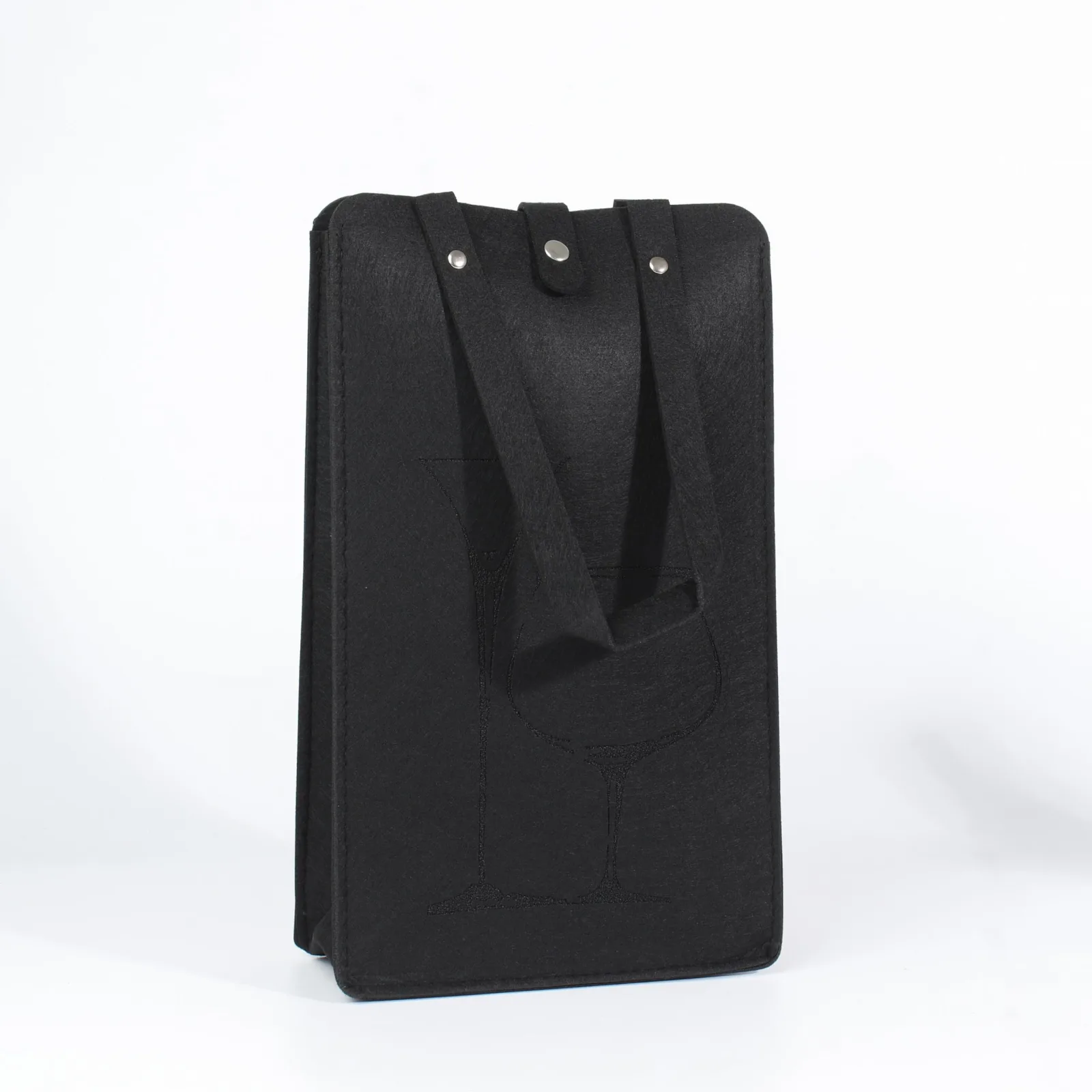
Felt and canvas are the reusable side of wine totes. They are soft, they do not tear easily, and they can be thrown in a bag or a car without falling apart. The trade-off is print quality. A logo on felt is fuzzy at the edges. Canvas takes a better screen print, but neither gives you the sharp detail of coated paper.
The handle is the first thing to check on any sewn tote. A single line of stitching on thin felt will rip out. You want a double stitch or a bar tack at the stress points. The handle material matters too: cotton webbing holds up better than a folded strip of the same felt.
These totes work well for wine club subscriptions, event handouts and corporate gifts where the bag itself is part of the present. They are not the right answer for a budget counter bag that gets thrown away. If you want a premium reusable option, see our Felt and Canvas Wine Bags. For a more structured, luxury look, Leather Wine Bags are a step up in cost and durability.
- Felt prints soft; canvas prints slightly sharper but still not photo-quality.
- Check the stitch count and bar tacks at handle joins.
- These are the best choice for a tote that is meant to be kept and reused.
Paper Wine Bags with Handles
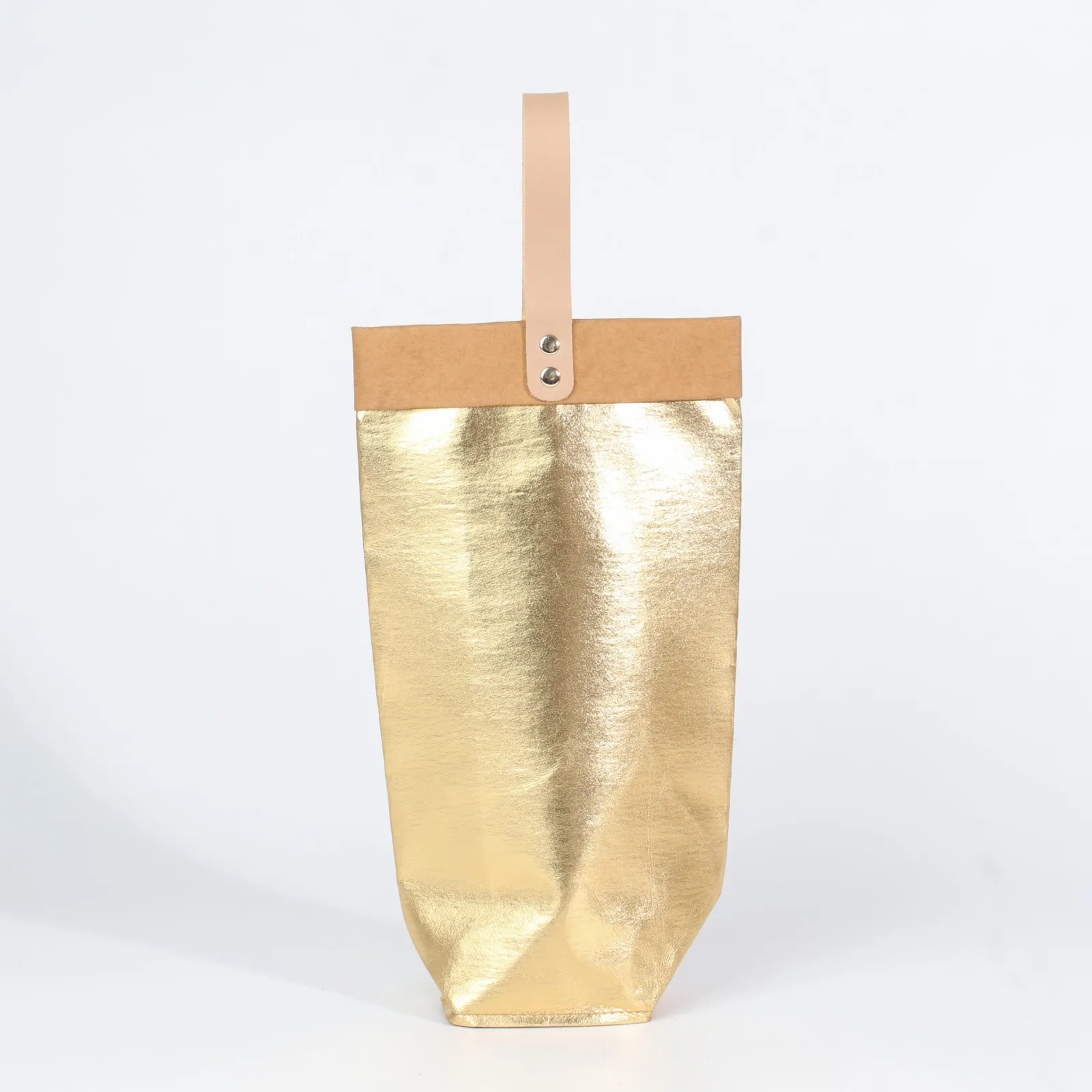
Paper wine bags are the volume option. They are light, they fold flat for storage, and they take sharp, vibrant printing. The material can be kraft, white card, coated paper or a specialty stock. The handle is usually twisted paper rope, flat paper ribbon or a die-cut hole with a reinforced patch.
The failure mode on paper is handle pull-out. A rope handle glued directly to the inside face of a thin bag will tear out under a swinging bottle. The fix is a reinforcement patch behind the handle or a folded top edge that spreads the load. We also see base blowouts when the bottom is a simple folded flap without a stiffener.
Paper bags are the right choice for wine shop counters, tasting events and promotional giveaways. They are not meant to be reused many times. If you need a bag that stands up empty on a shelf, ask for a rigid base insert or a gusseted bottom. For custom sizes and print, see Custom Wine Bag Manufacturing. For the range of paper stocks, check Materials and structures.
- Paper bags fold flat, which saves warehouse space and shipping cost.
- A reinforced handle patch is the single best upgrade for paper totes.
- Ask whether the bag stands up empty or needs a base insert.
Leather Wine Bags
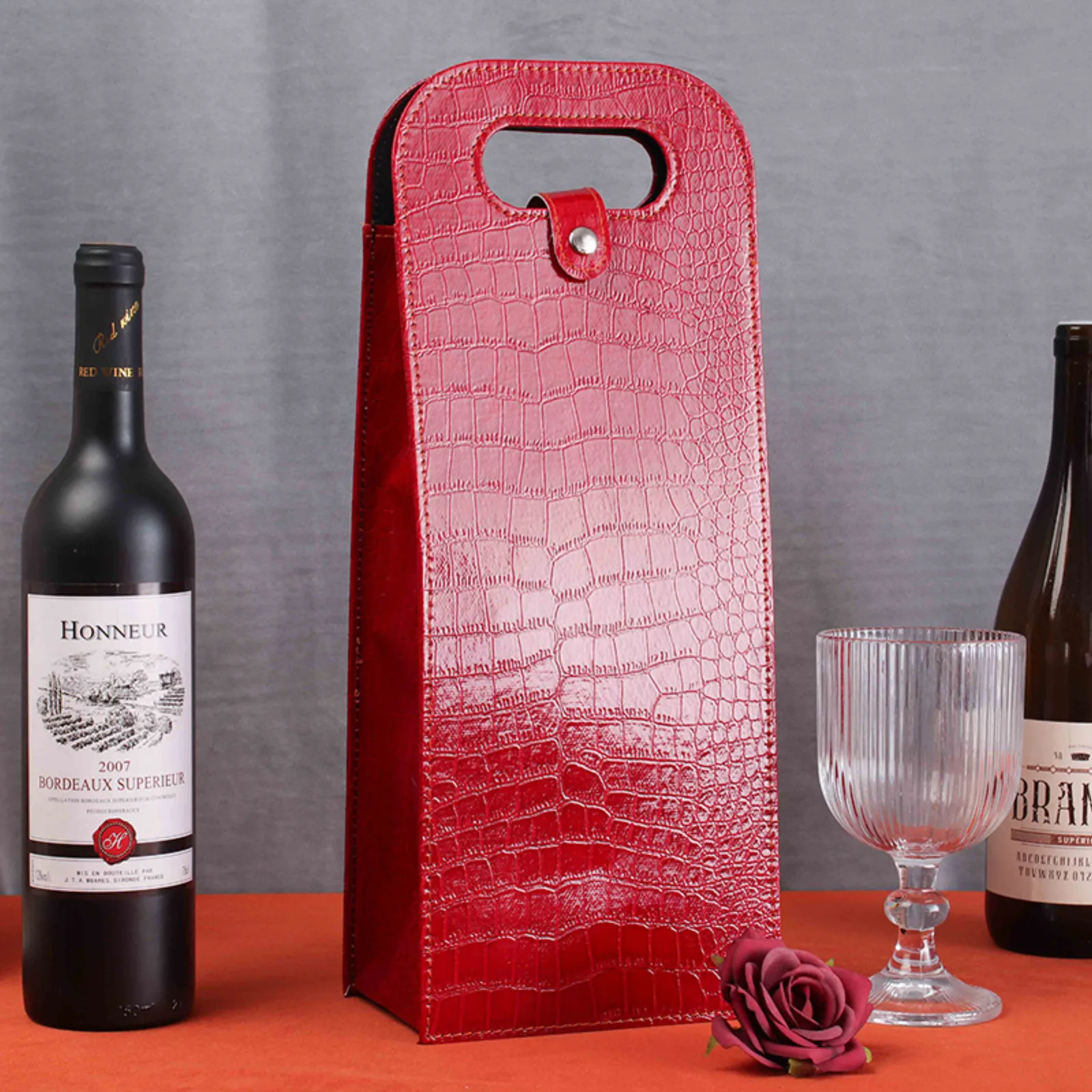
Leather wine bags are the top of the range. They are heavy, they are durable, and they make a statement. Most are made from PU or bonded leather, not full-grain, because the cost of full-grain would be prohibitive for a bag that carries a bottle. The handle is usually stitched or riveted.
The failure points are different here. Leather does not tear like paper, but the stitching can fail at the handle join if the thread is too light or the stitch length is too long. Riveted handles can pull through the leather over time if there is no backing washer. Check the hardware and the stitch line before you buy.
Leather totes suit corporate gifts, premium retail and special occasions. They are not a budget item. For a look at the options, see Leather Wine Bags. If you want a set that includes a matching box, our Wine Boxes and Box-and-Bag Sets combine both.
- Leather totes are usually PU or bonded leather, not full-grain.
- Check the stitch line and hardware at handle joins.
- These are for high-end gifting, not everyday counter use.
Print and Surface Trade-Offs
The surface you print on changes the result more than the print method. Coated paper takes a sharp, saturated image. Kraft gives a rustic, natural look but mutes bright colours. Felt and canvas soften everything, so a fine serif logo may become unreadable. Leather can be debossed or foil stamped, but it will never show a full-colour photo.
We match Pantone colours on paper and cardstock, and we hold black, deep blue and burgundy to a tight tolerance because those are the hardest to keep consistent. On fabric, colour control is looser. If your brand colour is a specific Pantone, ask for a printed sample before mass production. A blank sample shows structure; a printed sample shows the real surface.
The handle is also a print surface, or not. Twisted paper rope handles print poorly. Flat ribbon handles take a logo better. Canvas webbing can be printed, but the ink sits on the weave. If the handle is part of your brand, specify it early.
- Coated paper prints sharpest; kraft and fabric mute colours.
- Ask for a printed sample, not just a blank structural sample.
- Handle material affects whether you can print on it at all.
Specification Checklist
Before you ask for a quote, pin down the basics. Bottle count and bottle height determine the bag dimensions. Handle type and print method determine the cost and the failure points. Whether the bag needs to stand up empty determines the base design.
We make totes in single and two bottle formats, with sewn, glued or riveted handles, and with dividers or stiffened bases where needed. The process starts with your dimensions or a bottle sample, plus a reference design and quantity. We send a blank sample for structure and a printed sample for visuals before mass production.
If you are not sure what you need, tell us where the bag will be used: counter, event, subscription box or corporate gift. That one answer narrows the material, the handle and the print method faster than any spec sheet.
- Bottle count: one or two, and bottle height.
- Handle type: rope, ribbon, sewn fabric, riveted leather.
- Print method: offset, screen, foil or deboss.
- Does the bag need to stand up empty on a shelf?
Key points
- Handle join and base stiffness decide whether a wine tote survives one trip.
- Two bottle totes need a divider or a tight fit to stop tipping.
- Paper prints sharpest; felt and canvas are for reusable gifts.
- Ask for a printed sample, not just a blank structural sample.
- Specify bottle height, handle type and whether the bag must stand empty.
Questions buyers ask
What is the difference between a wine tote bag and a wine carrier bag?
They are the same thing in practice. A wine carrier bag usually has a more structured shape or a divider for two bottles, while a tote is softer and often single bottle. Buyers use both terms for a bag with handles that carries wine bottles. The key is to specify the bottle count and whether you need a divider.
How do I stop a two bottle wine tote from tipping over?
Use a divider between the two bottle slots. It can be a paper insert, a stitched fabric panel or a moulded pulp tray. The divider should reach at least to the bottle shoulder to stop leaning. A stiffened base also helps by keeping the bottom flat so the bottles do not rock.
Can I print a logo on a felt wine tote bag?
Yes, but the result is softer than on paper. Felt has a fuzzy surface that blurs fine lines and small text. Screen printing works better than offset. If you need a sharp logo, choose a coated paper bag or a canvas tote with a tighter weave. Always ask for a printed sample before mass production.
Send your bottle dimensions and a reference design, and we will quote a wine tote that holds up. Get a Quote
Put this on your bottle
Send the bottle sample or dimensions, quantity and a reference design. We reply with structure options and pricing.
- Email[email protected]