08 September 2026
What to Specify for Single Bottle Wine Totes
A single bottle wine tote fails at the handle join and the base. Those two points decide the whole specification. If the strap pulls out or the base sags, the bottle tips or the bag tears. This guide covers felt and canvas, kraft and cardstock paper, and leather options, plus print controls and sizing. It also points to our broader buyer guide before you commit.
Where Single Bottle Totes Fail
Most single bottle wine totes fail at the handle join. The whole load hangs from one narrow strap, and that is where the bag gives up. Next is the base. A flat base holds the bottle upright, but a soft or sags base tips the bottle at an angle. When the bag folds, the base is the first thing to crush. If you buy a tote that looks strong from the front but has a weak join, you are buying a handle failure waiting to happen.
The engineering is different from multi bottle totes. With two bottles, the bottles brace each other. With one bottle, there is nothing to lean on. That means every design choice has to do the job alone. You'll want the broader Wine Tote Bags for Retail and Gifting: A Buyer's Guide for multi bottle formats, but for single bottle work, the specification must be narrower and more exact.
Material Choices for One Bottle
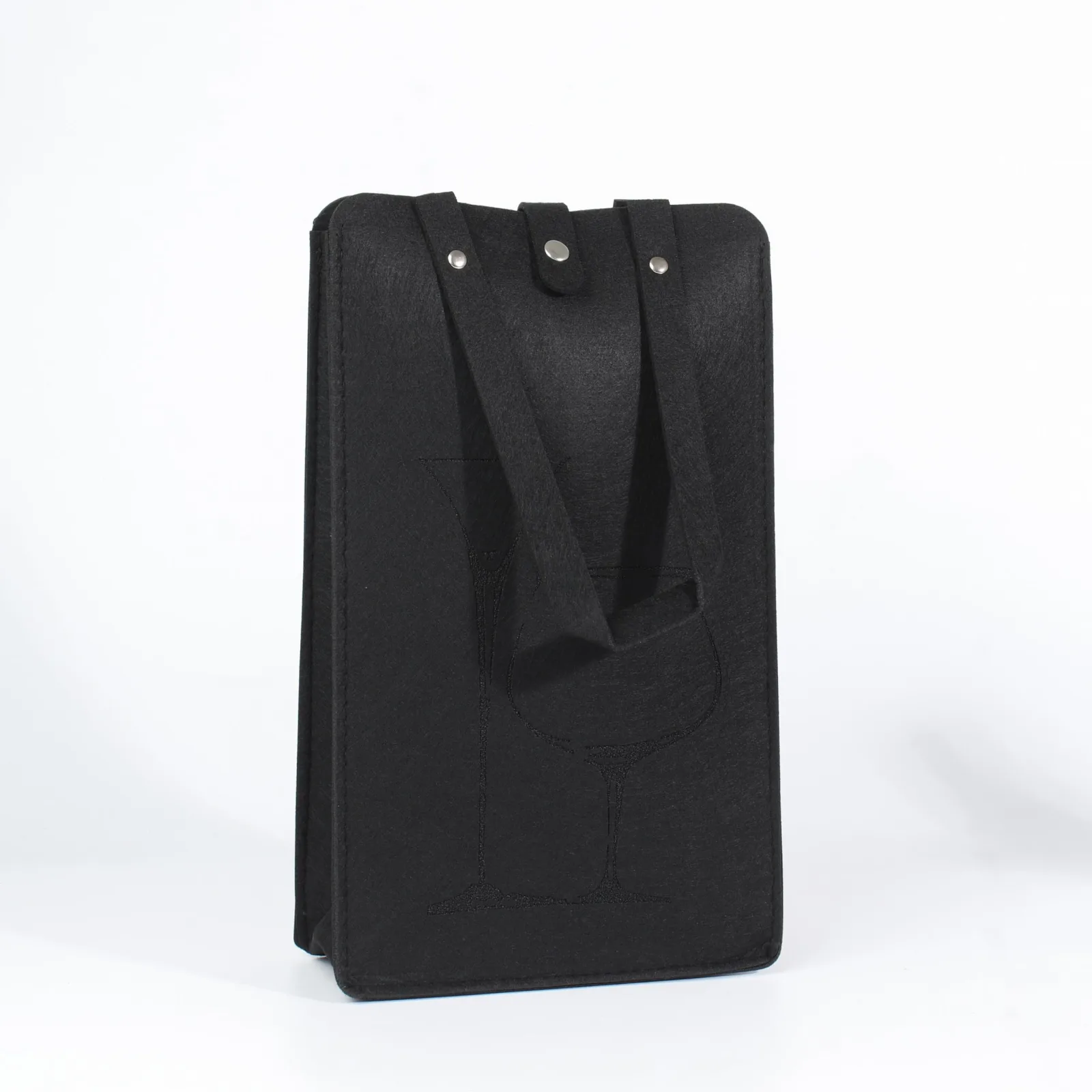
Felt and canvas totes are the workhorse for one bottle. They carry a 750 ml bottle comfortably and fold flat for shipping. The material is forgiving, so they can stand up empty better than paper. Print behaviour is different: felt shows ink less cleanly than paper, so simple logos and short brand marks work best. For retail, they look soft and premium. See our Felt and Canvas Wine Bags to compare structures.
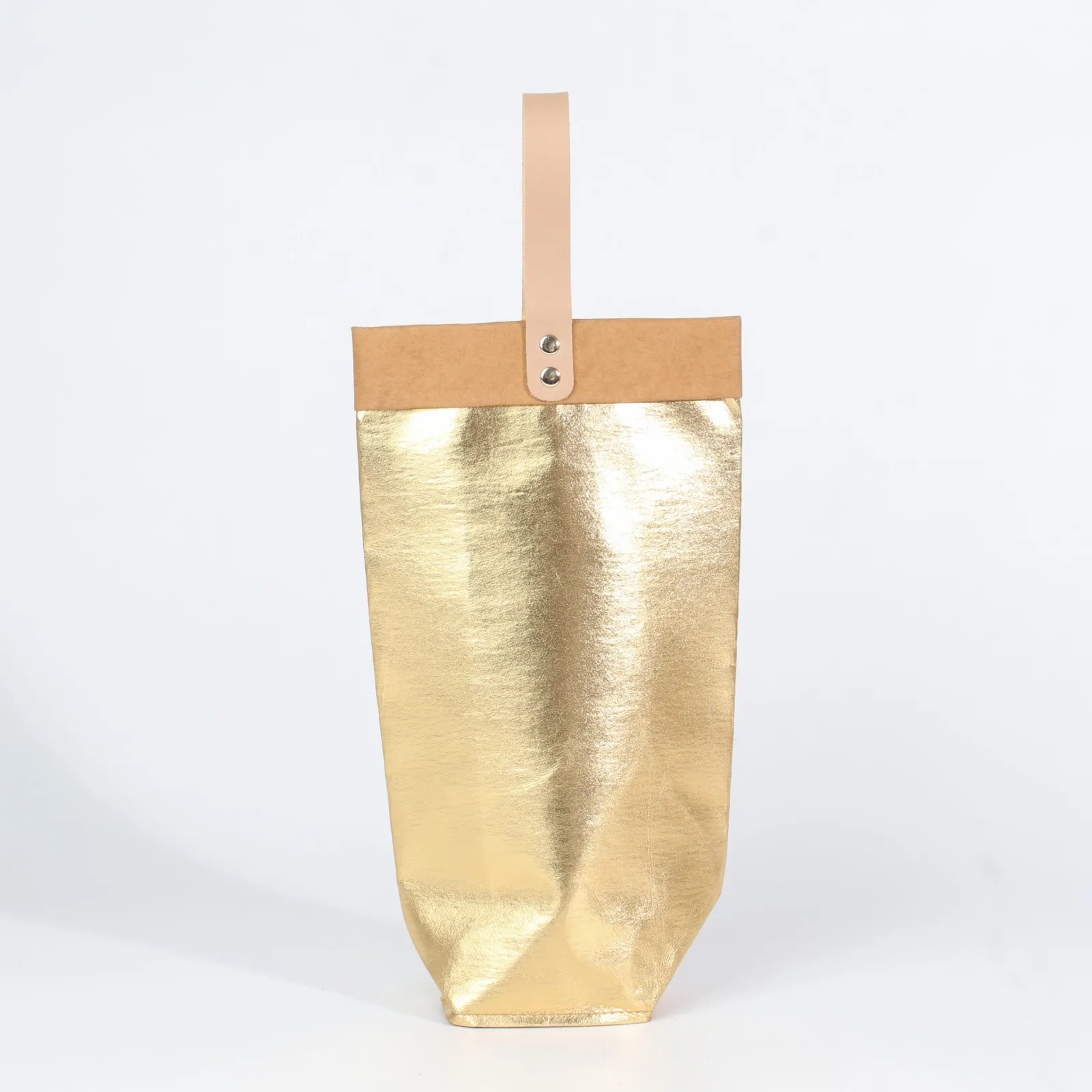
Kraft and cardstock paper are lighter and cheaper to ship. They print the cleanest of any material we offer. A good paper tote is stiff enough to hold a single bottle, but the base and handle join need reinforcement. They fold flat better than felt, and they are easier to brand with full colour. Browse Paper Wine Bags to see the paper options.
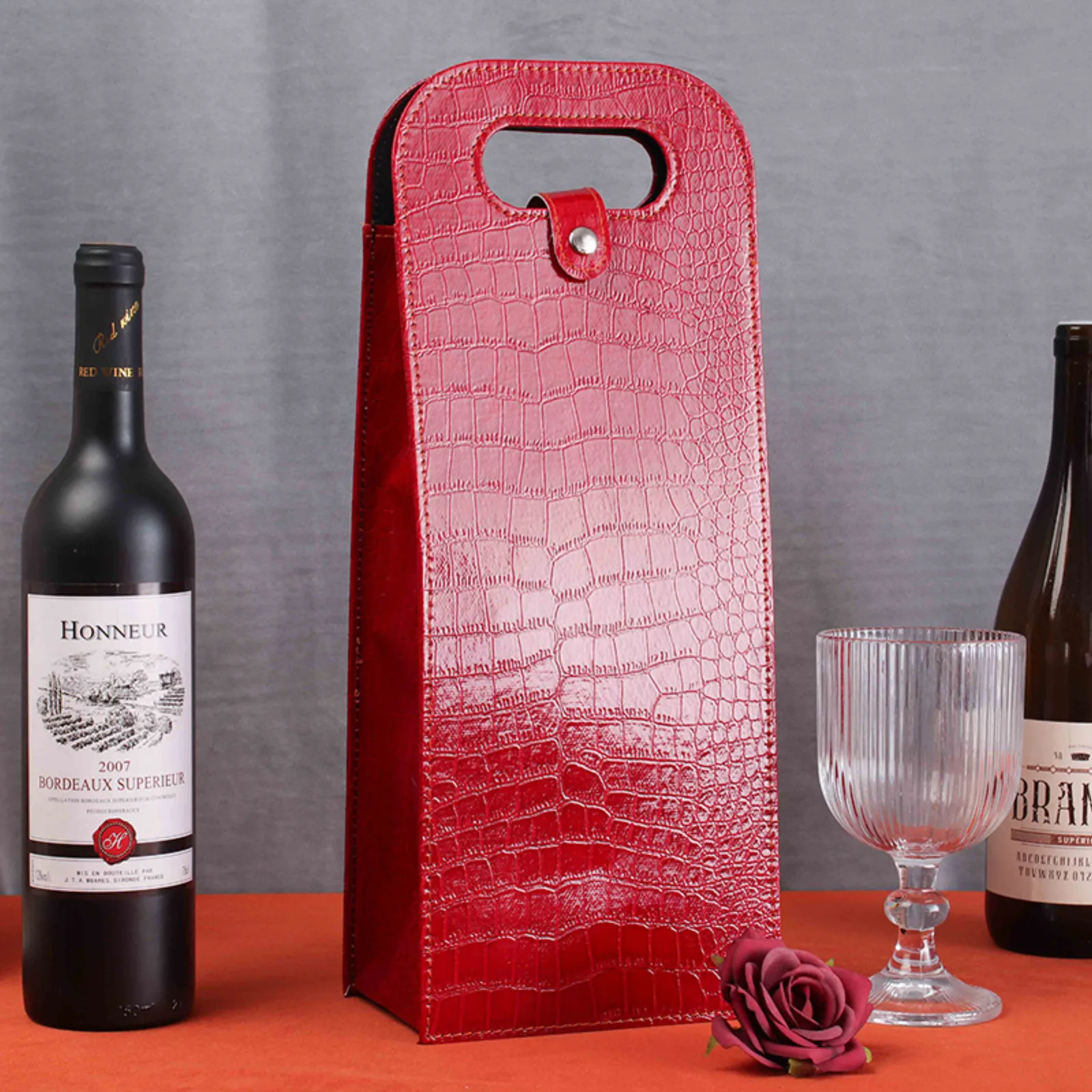
Leather totes are the premium answer for gifting and promotional runs. They hold the bottle upright better than paper, and they age with use. Printing on leather is limited, so you should plan for a small brand mark or a simple stamp. They are heavier than felt and do not fold as flat, so shipping volume is larger. See Leather Wine Bags if your buyer wants a higher-end bag.
Handles That Actually Hold
Start with the handle join, because that is where one bottle totes break. A sewn handle is the safest for daily carrying. A riveted handle is strong but shows hardware and needs a clean hole. A rope handle is light, but the rope can slip or fray at the patch. A ribbon handle is decorative, and it pulls out first. In every case, the reinforcement patch matters more on a single bottle bag because the whole load hangs from one narrow strap.
How you reinforce matters. If the patch is too small, the strap exits the bag before the thread fails. If the patch is too large, the bag looks patched and the fold line gets awkward. You want a patch sized to the strap width, with a double pass or bar-tack where the load sits. The goal is simple: after a shake of 10 seconds, the bottle should not move, and the handle should not loosen. That check is part of our in-house checks before shipping.
Where each handle pulls out matters. A sewn handle usually fails at the thread before the fabric. A riveted handle fails at the hole edge if the hole is too small or the rivet is too loose. A rope handle can slip through the patch. A ribbon handle gives way at the fold. You want the patch to be the last thing to fail, because the patch is the only thing between the strap and the bag body.
Base Construction for One Bottle
A single bottle concentrates weight on a small footprint. A flat base is not optional. If the base sags, the bottle sits at an angle, and the bag will look used after one trip. The base should be wide enough to keep the bottle upright and narrow enough that the bag still folds flat. This is the second failure point, and it is easy to get wrong when the bag is made to a nominal volume instead of the bottle.
Our control tolerance helps here. The bag body should be within plus or minus 2 mm, and the base reinforcement should be within plus or minus 1 mm. That level of control is what keeps the bag square when it stands. If the base is too loose, the bottle rolls. If it is too tight, the capsule touches the top. You are not guessing; you are specifying the fit to the bottle.
Sizing and Branding
Size the bag to the bottle, not to a nominal volume. Measure the shoulder diameter and the total height including the capsule. The shoulder is where a 750 ml bottle bulges, and the capsule is the highest point. If the bag is made to a standard 750 ml shape but your bottle has a taller capsule, the top will rub or the bag will look loose at the neck. A wine bottle tote should fit like a glove around the glass.
Branding is where a single bottle tote can look cheap or premium. Paper prints the cleanest, so full-colour logos work best on kraft or cardstock. Felt and canvas take a smaller mark or a woven label. Leather wants a simple brand mark. Black, deep blue and burgundy are the hardest colours to hold across a run, so we use Pantone matching, first-article approval, and mid-run sampling as controls. If your buyer sees colour shift between the first sample and the last bag, the print spec was not tight enough.
- Send the bottle sample or exact shoulder and capsule dimensions.
- Choose felt, canvas, kraft, cardstock, or leather.
- Specify the handle type and the reinforcement patch.
- State the base construction and how flat it must fold.
- Give the brand mark, colour, and print method.
- Add any special requirements for retail or promotional use.
Key points
- One bottle totes fail at the handle join and the base.
- Size the bag to the bottle's shoulder and capsule.
- Use a reinforcement patch large enough to be the last thing to fail.
- Match colour with Pantone, first-article approval, and mid-run sampling.
Questions buyers ask
How do I choose the right material for a single bottle wine tote?
Start with how the bag will be used. For daily carrying, felt or canvas is the safest. For clean printing, kraft or cardstock paper is the cleanest. For premium gifting, leather is the stronger answer. Match the material to the buyer: retail wants durability, promotional wants a clear brand mark, and gifting wants a finish that looks valuable in a gift.
What makes a handle strong enough for one bottle?
The handle join is the weak point. A sewn handle is the safest, while a rivet needs a clean hole. A rope or ribbon handle needs a patch sized to the strap. The patch should be the last thing to fail, and the bottle should not move after a 10 second shake. That is the practical check we use before shipping.
How tight should the bag fit the bottle?
Fit it to the bottle, not to a nominal volume. Measure the shoulder diameter and total height including the capsule. The bag should hold the bottle upright without pressing the glass. A bag that is too loose lets the bottle roll, and one that is too tight can crack the bottle. Our control tolerance keeps the bag body within plus or minus 2 mm and the base within plus or minus 1 mm.
Send us the bottle sample, reference design, and special requirements to start. Get a Quote
Put this on your bottle
Send the bottle sample or dimensions, quantity and a reference design. We reply with structure options and pricing.
- Email[email protected]