23 September 2026
Canvas Wine Bags Bulk: Custom Tote Sourcing
Canvas wine bags bulk get specified by four things: fabric weight, handle construction, gusset depth and print method. Get those right and the bag survives a full bottle and a second life as a tote. Get them wrong and you'll see handles pull out and bases sag. Here's how we'd spec it, and when canvas is the wrong answer.
Fabric weight decides everything
Heavier canvas holds its shape and resists stretching when a 750 ml bottle leans into one corner. Lighter canvas feels softer in the hand and folds flat for storage, which matters if your buyer is stacking bags in a gift set. The trade-off cuts both ways: heavy canvas costs more per bag, and if you fold it tight for shipping it creases and those creases are slow to relax.
Here's the practical split. Promotional runs where the bag is a throwaway carrier: lighter canvas, folded, shipped flat. Gifting programs where the recipient keeps the tote: heavier canvas, structure that survives reuse. If you can't decide, ask yourself whether the bag gets a second life. That single question settles the weight more often than anything else.
One warning from the floor. Canvas weight and handle strength are separate decisions. A heavy body with a thin, lightly stitched handle is the worst combination, because the bag feels solid and the buyer loads it past what the handle can carry. Spec the handle to the load, not to the body.
Handles and gussets: where bags fail
Handles can be sewn flat, reinforced with rivets or a patch, or left long for shoulder carry. Flat sewn handles are the cheapest and the most common failure point. Rivets and patches spread the load across more fabric, which is what you want on a heavier bag. Long handles look generous but they swing, and a swinging bag on a hard floor is a cracked bottle waiting to happen.
Gussets control two things: whether the bag stands upright on a shelf, and whether a second bottle fits. A shallow gusset on a heavy bottle makes the base sag, and a sagging base tips the bottle into the side wall. Measure the bottle diameter before you pick gusset depth. Not the label, not the neck, the widest point of the glass.
The failure modes I see most: handle pull-out when stitch density is too low for the load, gusset bulge when the bottle diameter was never measured, and a base seam that opens because the base was stitched like a side seam. None of these show up in a photo of the sample. They show up when someone loads the bag and walks.
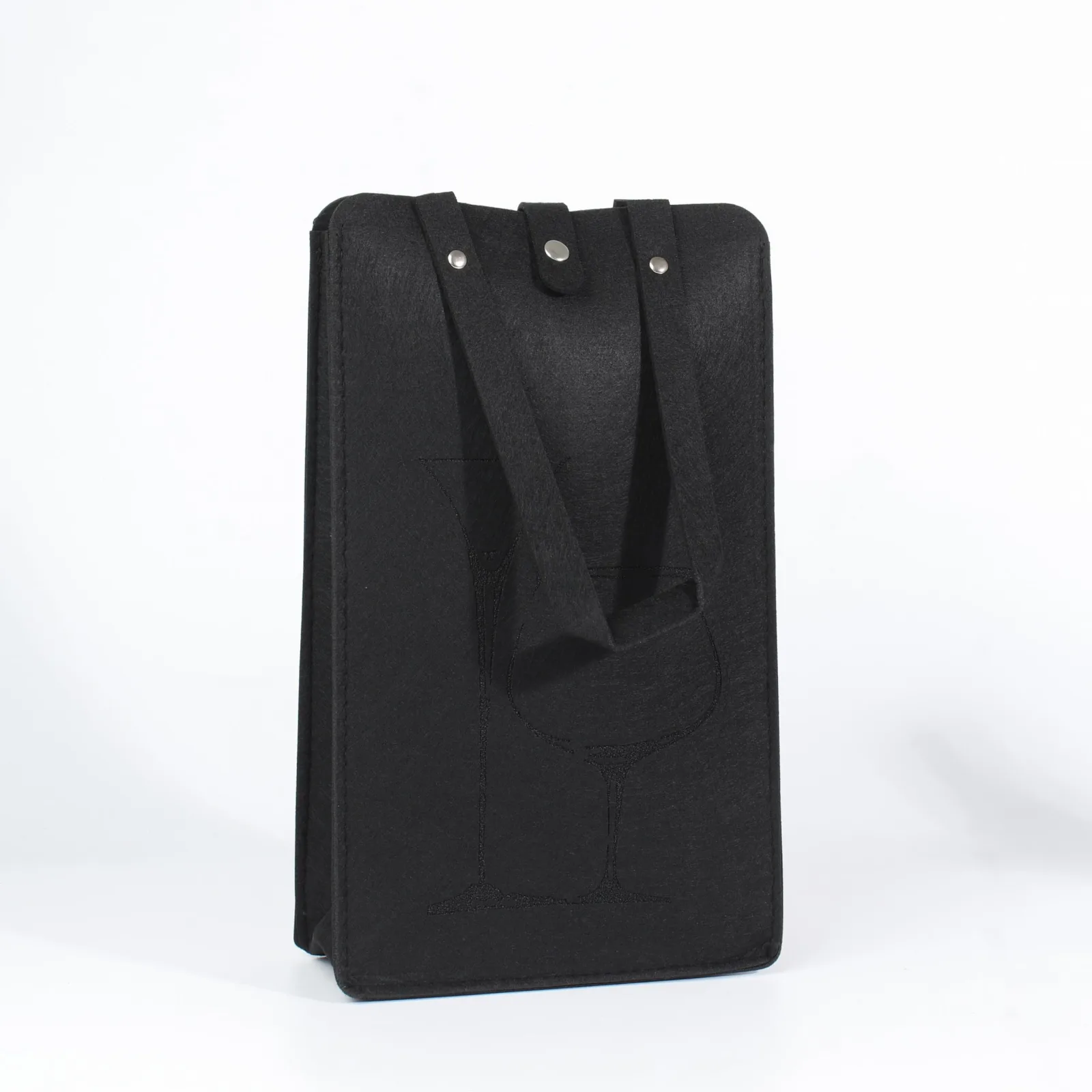
For the softer end of the range, our felt and canvas wine bag options cover the constructions we build most often, and the same handle logic applies to both.
Print methods and what they cost you
Screen printing gives opaque, durable coverage on canvas and suits one or two spot colours. The ink sits in the weave, so it holds up to handling. Add colours and you add screens, which is fine if the artwork is simple and the run is consistent.
Digital printing handles multi-colour artwork without a screen, which is a real advantage on a photographic label or a gradient. The catch is that digital ink sits on the surface of the canvas rather than in it. Stretch the fabric and the print can crack along the fold lines. If your artwork wraps a corner or crosses a gusset, that's where you'll see it first.
Embroidery is the premium option. It's slow, it costs more, and it gives a raised mark that reads as considered rather than printed. For a gifting program where the bag is the gift wrap, embroidery on a heavy canvas body is a strong combination. For a promotional giveaway, it's usually money spent where nobody notices.
Colour shift on deep shades is the hardest thing to hold. Black, deep blue and burgundy on canvas are unforgiving, and a slight shift between the bag body and the handle shows up immediately under retail lighting. If your brand colour is one of those, plan for a first-article approval and mid-run sampling rather than assuming the first bag matches the last.
Canvas against felt and paper
Felt is softer and cheaper, and it pills. It also holds less shape than canvas, so a felt bag with a bottle in it slumps. That's fine for a wine shop's everyday carrier and wrong for a gift set that sits on a shelf.
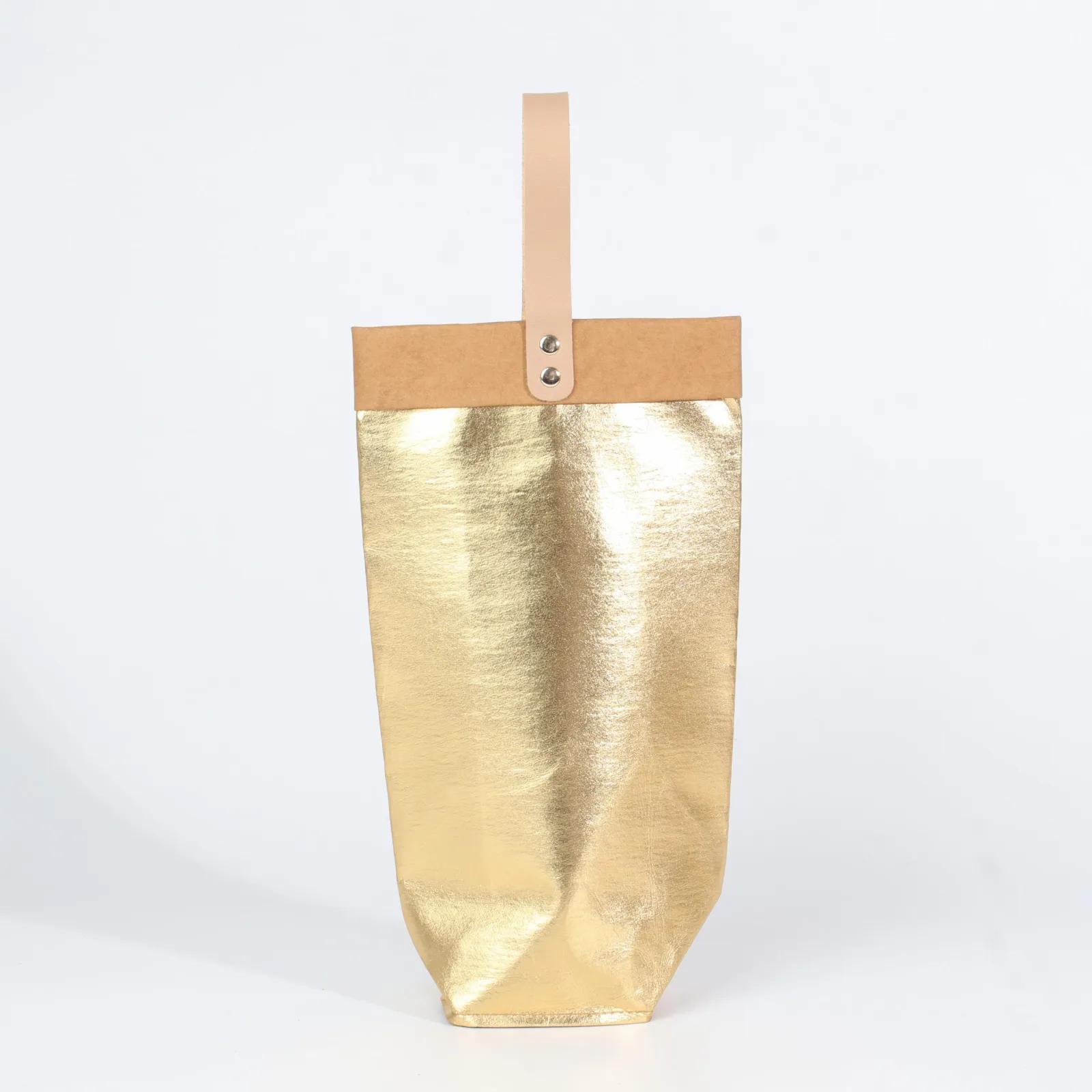
Paper is the lowest cost and it prints sharply. Sharp registration, crisp edges, no weave to fight. But it isn't reusable, and a paper bag with a bottle in it has one trip in it at most. If your program is built around the bag being kept, paper is the wrong material even though it's the cheapest line on the quote.
Canvas is the reusable choice. It takes a full bottle, it survives the trip home, and it stays in the house. That's the whole argument for paying more per bag. We compared the three materials in more detail in our breakdown of kraft, felt and canvas, and the short version is that reuse intent is the deciding factor, not unit cost.
One more thing buyers miss: mixed programs. If part of the run is a giveaway and part is a retail gift set, you can run paper for one and canvas for the other. Same artwork, two materials, two jobs.
What we control, and what you decide
Our control tolerance applies to insert and box dimensions, not to fabric. Insert plus or minus 1 mm, box body plus or minus 2 mm, magnet position plus or minus 1 mm, corners 90 degrees when erected. Those are the numbers we hold on the box side.
For bags, the checks are different. We look at handle attachment, base strength and print alignment in our in-house checks, and those are visual and physical checks rather than a tolerance figure. If you need the bag to match a box in a set, tell us at the design stage so the handle and the box lid are approved together. That's part of how we run custom wine bag manufacturing, and it's cheaper than fixing a mismatch after the fact.
The rest is yours. Bottle weight, reuse intent, whether the bag ships flat or stands, and how it will be packed. Those four answers shape the spec more than any preference on colour or handle style.
When canvas is the wrong answer
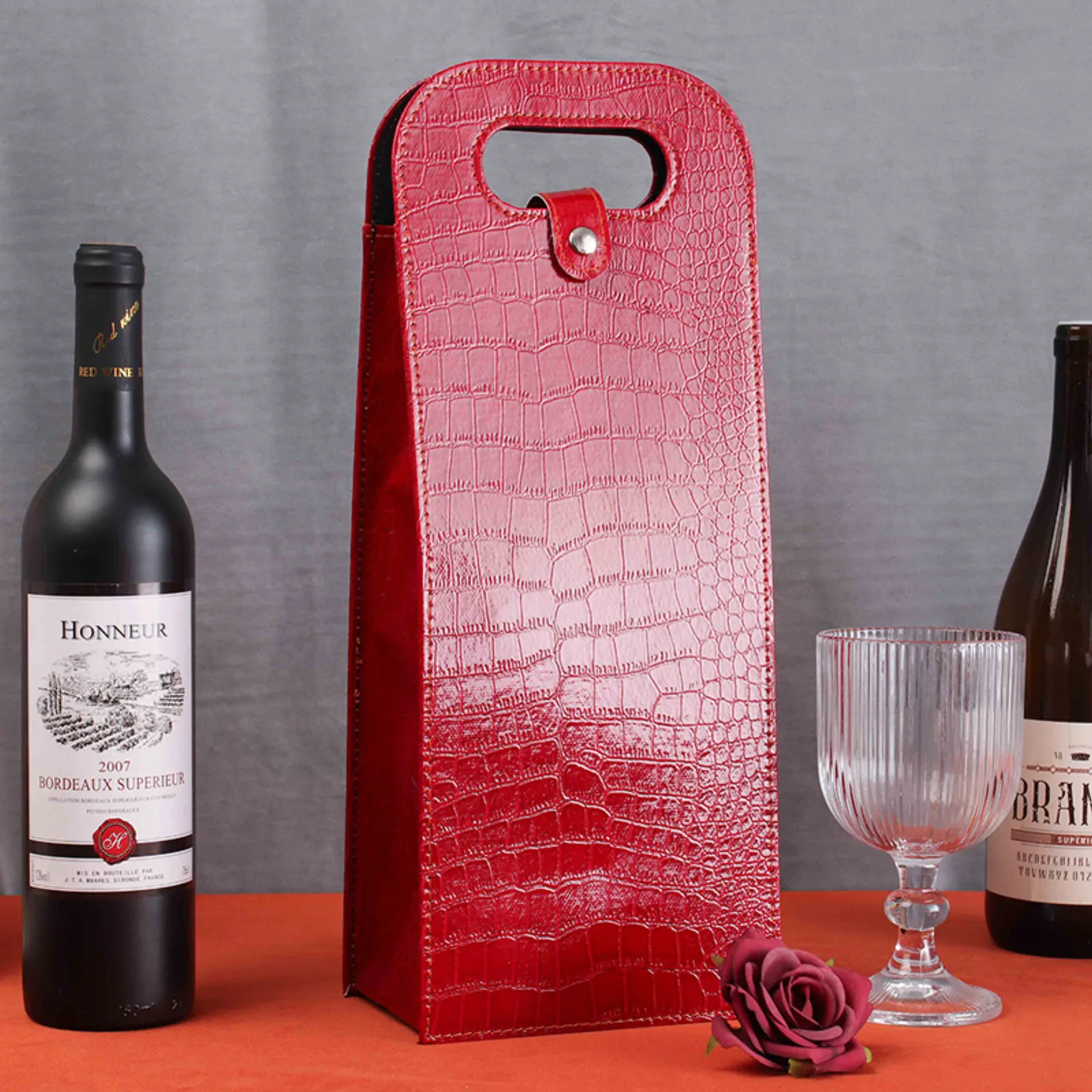
If you need a single-use bag at the lowest cost, paper is better. Don't pay for canvas you're going to throw away. If the bottle needs a rigid presentation box, a box-and-bag set is better than a bag alone, because the box does the protecting and the bag does the carrying.
And if your program is a low-cost promotional giveaway where the bag is a means of transport rather than a keepsake, canvas is overkill. The recipient won't notice the weight, and you'll have paid for a material that never gets its second life. That one is not worth the money.
Canvas earns its cost in one situation: the bag is meant to be kept. If that's your program, we should talk about weight, handle and gusset before anything else.
What to send us
Send bottle dimensions or a bottle sample, a reference design, the quantity, and any special requirements. If the bottle is unusual, the sample beats the drawing every time, because glass varies more than buyers expect.
We offer two sample types. A blank sample shows you the structure: weight, handle, gusset, how it stands. A printed sample shows you the visual: colour, registration, how the artwork sits on the weave. Approve the structure first, then the print. It's a shorter path than trying to fix both at once.
If you want to see how we handle materials and construction before you commit to a spec, our materials and structures page lays out what we work with, and how we control quality covers the checks a bag goes through before it ships.
Key points
- Heavier canvas holds shape and resists stretch; lighter canvas folds flat but sags under a full bottle.
- Spec the handle to the load, not the body, or the handle becomes the failure point.
- Measure the widest point of the bottle glass before you choose gusset depth.
- Paper wins on cost for single-use bags; canvas only pays off when the bag is kept.
Questions buyers ask
What fabric weight should I pick for canvas wine bags bulk?
It depends on reuse intent. If the bag is a keepsake, go heavier so it holds structure under a full bottle. If it's a promotional carrier that gets tossed, lighter canvas folds flat and costs less. Heavy canvas creases if folded tight, so match the weight to how you'll pack and ship.
Screen printing or digital printing on canvas totes?
Screen printing for one or two spot colours: opaque, durable, sits in the weave. Digital for multi-colour artwork with no screens, but the ink sits on the surface and can crack if the canvas is stretched across a fold. Embroidery is the premium option if the bag is the gift.
How do canvas wine bags compare with felt and paper?
Felt is softer and cheaper but pills and holds less shape. Paper is the lowest cost and prints sharply but isn't reusable. Canvas is the reusable choice, so it makes sense for gifting programs where the recipient keeps the bag rather than a single-use carrier.
Send your bottle dimensions or a bottle sample, reference design, quantity and special requirements through the quote form and we'll come back with a spec and a sample plan. Get a Quote
Put this on your bottle
Send the bottle sample or dimensions, quantity and a reference design. We reply with structure options and pricing.
- Email[email protected]